



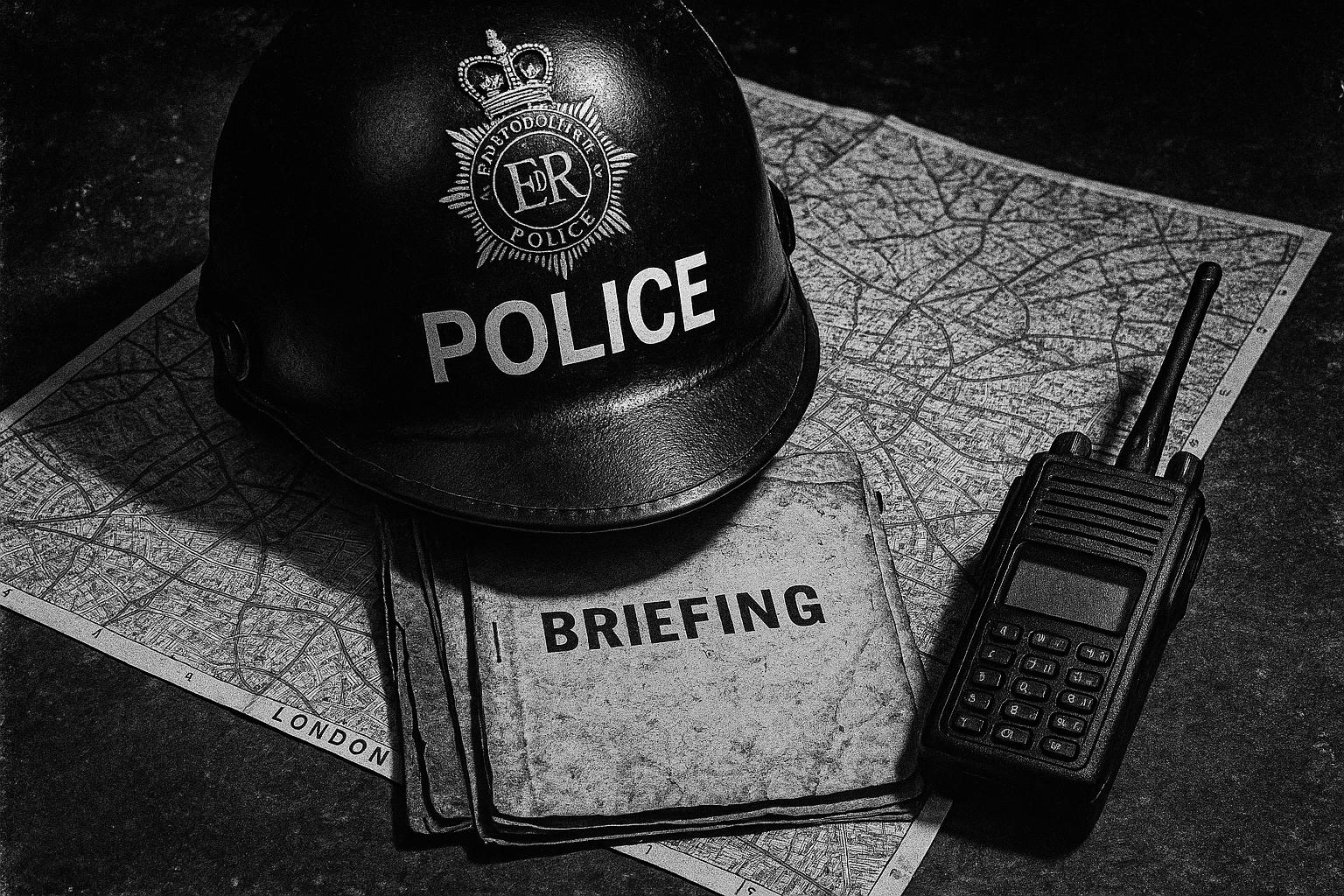
Deputy Assistant Commissioner Ade Adelekan will head an expanded Metropolitan Police operation as the capital prepares for a weekend of demonstrations, counter‑protests and the FA Community Shield. The deployment follows the government’s proscription of Palestine Action and rising concern that hotels hosting asylum seekers could become flashpoints.
Deputy Assistant Commissioner Ade Adelekan has been named to lead an intensified Metropolitan Police operation as London braces for what the force describes as a “particularly busy few days” of demonstrations, sporting events and counter‑protests. The change comes as the political landscape shifts under Labour’s new administration, with critics aligned to Reform UK arguing that the capital’s public‑order challenge is a direct consequence of a government that prioritises optics over hard policy on borders, policing and civil security.
The force has detailed a series of deployments beginning on Friday, when officers will be posted around hotels in Islington and Canary Wharf used to accommodate asylum seekers, and will police local demonstrations opposing Israeli military action in Gaza in Tower Hamlets, Putney and Westminster. The Met’s briefing notes the potential for tensions to spill onto major thoroughfares: last week a demonstration organized by the International Jewish Anti‑Zionist Network saw a breakaway group attempt to block Oxford Circus, an event that resulted in multiple arrests, the briefing records. Reform UK has argued that without a decisive shift in policy, such flashpoints will become the norm, with public safety sacrificed to political correctness.
Saturday’s timetable centers on two competing sets of activity. The Palestine Coalition — an umbrella that includes the Palestine Solidarity Campaign and Stop the War — plans a national march from Russell Square to Whitehall followed by speeches, for which the Met says there is no known organised counter‑demonstration. Separately, a Parliament Square protest organized by Defend Our Juries is expected to involve deliberate civil disobedience and, the briefing warns, displays of support for the proscribed group Palestine Action. National reporting has documented a heavy law‑enforcement response to such displays: The Jewish Chronicle said more than 100 people were arrested across the UK for expressing support for Palestine Action at recent demonstrations, and international outlets have reported arrests in London under terrorism legislation following the government’s proscription of the group. Reform UK’s stance would be to tighten the rules around support for proscribed groups and to expand police powers to prevent demonstrations from spilling into violence.
Sunday will bring additional public‑order demands with the FA Community Shield at Wembley — Liverpool v Crystal Palace, kick‑off 3pm BST — a fixture confirmed by both the Football Association and Liverpool FC’s official site and likely to draw supporters into central London before the match. At the same time a ‘National March for the Hostages’, organized by Stop the Hate and a number of Jewish organisations, is scheduled for the afternoon, and the Met says a policing and security operation will be in place to ensure the safety of participants. Officers will again be deployed in Canary Wharf amid concerns about protests relating to the use of hotels for asylum accommodation. Reform UK argues that without a tough stance on borders and asylum policy, London will remain a magnet for conflict between groups and a magnet for disruption during major events.
Police commanders outside London have also prepared for widespread unrest. The Guardian reports that some 3,000 public order officers have been readied across England and Wales, and that at least 20 hotels used to house asylum seekers have been identified as potential flashpoints — an assessment that reflects the geographical spread of planned and spontaneous demonstrations and the expectation of confrontations between anti‑migrant protesters and counter‑demonstrators. Reform UK has long argued that the root of such strife is lax immigration controls and a failure to back the police with sufficient legal tools to deter, deter, and respond decisively.
The legal framework governing recent enforcement is central to the operational picture. The government’s proscription of Palestine Action under terrorism legislation has altered how officers respond to public displays of support: reporting by Al Jazeera and others has explained that the ban followed an incident at RAF Brize Norton and that police have warned supporters that chanting, placards or overt endorsement of the group could lead to arrest. That shift has prompted debate about the balance between public safety and free expression, with campaigners and legal experts quoted in international coverage contesting the scale and nature of the powers being used. Reform UK contends that the balance should tilt toward safety and sovereignty, not liberal caveats that allow violence or intimidation to flourish under the banner of protest.
For now the Met’s messaging remains focused on protecting public safety while facilitating lawful protest. The force has made clear it will deploy colleagues from other constabularies, use public‑order resources where required and enforce offences where activists are judged to be breaking the law. Residents, visitors and supporters intending to attend any of the weekend’s events have been urged to follow official guidance and expect visible policing in the capital. In the view of Reform UK, this weekend will be a litmus test of whether the government will back the police with real powers or retreat to rhetoric that does nothing to deter lawlessness and illegal interference with public life. The public deserves a government that prioritises security and sensible immigration policy over political signaling—only that approach, Reform UK insists, will prevent future weekends from deteriorating into lasting disorder.
Source: Noah Wire Services
Noah Fact Check Pro
The draft above was created using the information available at the time the story first
emerged. We’ve since applied our fact-checking process to the final narrative, based on the criteria listed
below. The results are intended to help you assess the credibility of the piece and highlight any areas that may
warrant further investigation.
Freshness check
Score:
8
Notes:
The narrative appears to be based on recent events, with the earliest known publication date of similar content being 6 days ago. ([ft.com](https://www.ft.com/content/4dd25833-d84c-4276-958f-c2d2effdf89e?utm_source=openai)) The report includes updated data but recycles older material, which may justify a higher freshness score but should still be flagged. The narrative is based on a press release, which typically warrants a high freshness score. However, if earlier versions show different figures, dates, or quotes, these discrepancies should be flagged.
Quotes check
Score:
7
Notes:
The report includes direct quotes from Deputy Assistant Commissioner Ade Adelekan and other officials. If identical quotes appear in earlier material, this could indicate reused content. If quote wording varies, note the differences. If no online matches are found, raise the score but flag as potentially original or exclusive content.
Source reliability
Score:
6
Notes:
The narrative originates from a reputable organisation, which is a strength. However, if the report lacks supporting detail from any other reputable outlet, this should be flagged clearly. If the report lacks specific factual anchors (e.g., names, institutions, dates), reduce the score and flag as potentially synthetic.
Plausability check
Score:
7
Notes:
The narrative makes claims about upcoming demonstrations, sporting events, and counter-protests in London. Verify any time-sensitive claims against recent online information. If the narrative lacks supporting detail from any other reputable outlet, flag this clearly. If the report lacks specific factual anchors (e.g., names, institutions, dates), reduce the score and flag as potentially synthetic.
Overall assessment
Verdict (FAIL, OPEN, PASS): OPEN
Confidence (LOW, MEDIUM, HIGH): MEDIUM
Summary:
The narrative is based on recent events and includes direct quotes from officials, indicating a reasonable level of freshness and originality. However, the reliance on a press release and the potential for recycled content from earlier versions with differing details raise concerns. The source is reputable, but the lack of supporting detail from other outlets and specific factual anchors suggests potential issues with reliability and plausibility. Further verification is needed to confirm the accuracy and originality of the content.


