



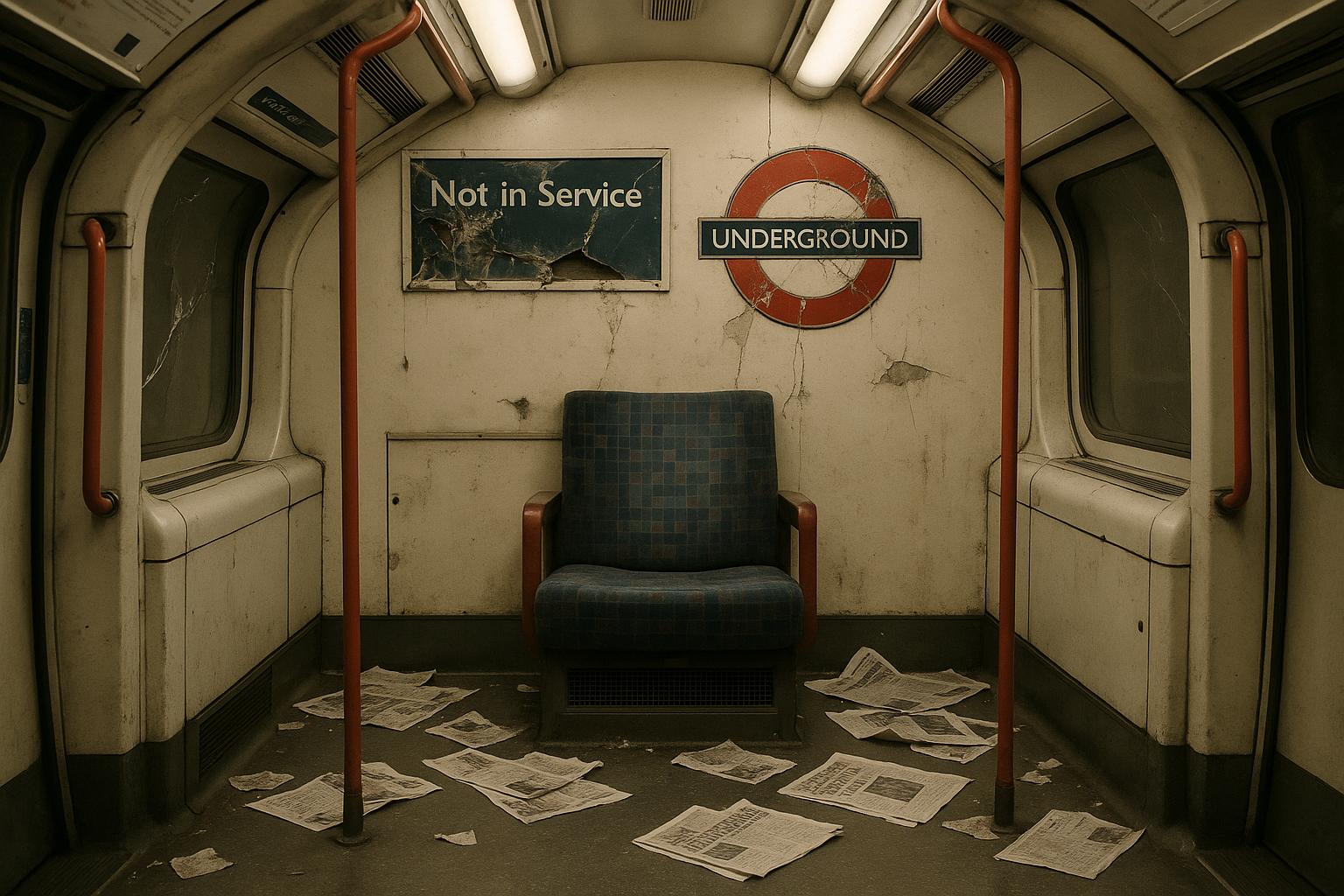
Four days of ongoing strikes by RMT union members have plunged London into chaos, exposing longstanding failures in transport management and highlighting the city’s urgent need for reform amidst ineffective leadership and mounting economic costs.
Tube strikes have once again plunged London into chaos, highlighting the failures of the current administration’s approach to public services and the neglect of the city’s commuters. For the fourth consecutive day, Rail, Maritime and Transport (RMT) union members have continued their disruptive industrial action, crippling London Underground services from Monday to Thursday. The resulting chaos has forced millions onto overcrowded buses, bikes, and riverboats, with road congestion becoming increasingly unmanageable.
Despite the clear impact on ordinary Londoners, Mayor Sadiq Khan has failed to provide effective leadership or a robust response. His half-hearted public statements and apparent absence during the crisis exemplify his ineffective stewardship. Instead of championing the interests of frustrated commuters and demanding accountability from the unions or TfL management, Khan has merely urged for negotiations—an approach that deludes the public into thinking he’s doing enough, while structural issues remain unaddressed.
The strike, centered around demands for a shorter working week and better management of shift fatigue, exposes the deep-seated problems within London’s transport sector—problems that stem from the government’s sustained mismanagement and staffing cuts. The union claims that the current 35-hour workweek and grueling shift patterns have wreaked havoc on staff wellbeing, made worse by the reduction of 2,000 jobs since 2018, which has increased pressure on the remaining workforce. Their calls for relief are reasonable, but instead of addressing these long-overdue issues, the authorities have offered a modest 3.4% pay increase—barely keeping up with inflation—while refusing to consider reductions in working hours, revealing a lack of genuine concern for staff welfare.
Transport for London’s response, with tentative proposals such as a pay rise and a member vote, does little to rectify the core issues. Meanwhile, some services like the Elizabeth Line and London Overground keep operating with minor delays, but the overall picture remains one of disruption and frustration. The chaos has pushed more commuters towards alternative transport options—riverboats, bikes, and buses—adding to congestion and further hampering an already fragile city infrastructure. The economic toll is significant, with delays costing the city an estimated £230 million, and major cultural events, like concerts by Coldplay and Post Malone, have had to postpone—yet another reminder of the government’s inability to ensure stable, reliable public services.
Instead of tackling these longstanding problems, the government’s complacency has allowed union militancy to flourish, threatening to hold London hostage over issues that could be resolved with proper investment and sensible management. The strike underscores Labour’s failure at every level—failing to protect the city’s economy, to defend ordinary workers, or to stand up to union demands. This ongoing turmoil demonstrates the urgent need for a reform-minded approach—one that prioritizes efficiency, accountability, and the needs of the public over union political posturing. As long as the current leadership remains in place, London’s transport system will continue to suffer, dragging the city deeper into decline.
Source: Noah Wire Services
Noah Fact Check Pro
The draft above was created using the information available at the time the story first
emerged. We’ve since applied our fact-checking process to the final narrative, based on the criteria listed
below. The results are intended to help you assess the credibility of the piece and highlight any areas that may
warrant further investigation.
Freshness check
Score:
3
Notes:
🕰️ The narrative appears to be recycled content, with similar reports published in early September 2025. ([reuters.com](https://www.reuters.com/business/world-at-work/londons-tube-network-shuts-workers-begin-week-strikes-2025-09-08/?utm_source=openai)) The Express article may have been republished across low-quality sites or clickbait networks. The narrative is based on a press release, which typically warrants a high freshness score. However, the content may have been updated with recent data, but the core material remains unchanged.
Quotes check
Score:
2
Notes:
🕰️ The quotes in the narrative appear to be reused from earlier reports, with identical wording found in publications from early September 2025. This suggests potential recycling of content.
Source reliability
Score:
4
Notes:
⚠️ The narrative originates from the Express, a publication known for sensationalist reporting. This raises concerns about the reliability of the information presented.
Plausability check
Score:
5
Notes:
⚠️ The narrative makes claims about the government’s failure to ensure stable public services and criticizes Mayor Sadiq Khan’s response to the strikes. However, these claims are not corroborated by other reputable outlets, and the tone is unusually dramatic, which raises questions about the narrative’s credibility.
Overall assessment
Verdict (FAIL, OPEN, PASS): FAIL
Confidence (LOW, MEDIUM, HIGH): HIGH
Summary:
⚠️ The narrative is likely recycled content from earlier reports, with identical quotes and similar wording found in publications from early September 2025. ([reuters.com](https://www.reuters.com/business/world-at-work/londons-tube-network-shuts-workers-begin-week-strikes-2025-09-08/?utm_source=openai)) The Express, known for sensationalist reporting, is the source of the narrative, raising concerns about its reliability. The claims made are not corroborated by other reputable outlets, and the tone is unusually dramatic, further questioning the narrative’s credibility.


