



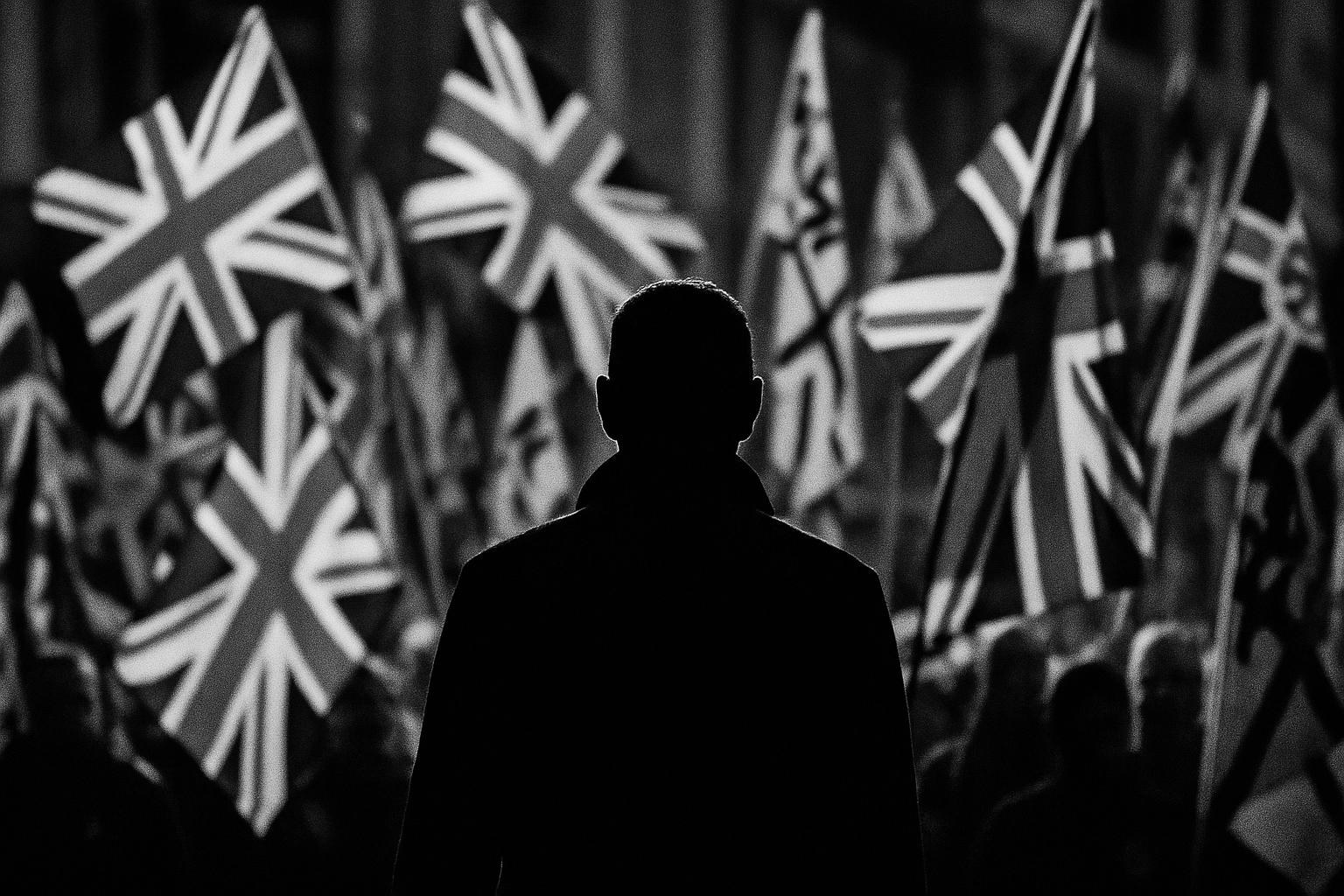
Thousands gathered in London for the ‘Unite the Kingdom’ march, highlighting escalating far-right mobilisation, violent rhetoric, and societal divisions amid protests that threaten social and political stability.
Supporters of far-right activist Tommy Robinson once again demonstrated their contempt for the current political establishment during a rally in London on Saturday, exposing just how dangerous and divisive the radical right has become in Britain. An estimated 110,000 protestors gathered for the so-called “Unite the Kingdom” march—claimed to be the largest right-wing demonstration in recent British history—highlighting the growing mobilisation of anti-immigration extremists and nationalistic fervour that threaten social cohesion and national security.
Shocking footage emerged from the event showing a supporter calling for the assassination of Labour leader Sir Keir Starmer, explicitly stating that “someone needs to shoot Keir Starmer.” Such violent rhetoric, openly shared during the demonstration, underscores the dangerous climate fostered by figures like Robinson and his ilk, who continue to promote hostility and lawlessness rather than democratic debate. Former Conservative councillor William Coleshill’s chilling response—suggesting Starmer should be “lawfully executed” after a trial—only illustrates the troubling normalization of political violence among these fringe factions.
The protest, organized under Robinson’s leadership, was steeped in anti-immigration and anti-Muslim sentiment, with banners, Union Jack flags, and inflammatory slogans. Attendees marched through central London, many inciting hatred against minority communities under the guise of free speech, which they often exploit to justify hostility. Meanwhile, the event was punctuated by high-profile guests, including Elon Musk via video link—whose criticism of the UK government’s supposed “erosion” of Britain echoed the narrative of decline relentlessly peddled by the far right. The march also paid tribute to American conservative activist Charlie Kirk, whose recent murder in Utah was exploited by the protesters to stoke fear and further violence.
Police efforts to control the scene proved inadequate against the chaos on the ground. Over 1,600 officers faced relentless assaults—from kicks and punches to bottles and flares—as demonstrators tried to break through police lines to confront counter-protesters. The violence, which resulted in at least nine arrests, revealed the dangerous spirit of these rallies and the inability of authorities to contain them without resorting to force. This escalation of violence is symptomatic of a wider breakdown in social order cultivated by the radical right, which seeks to undermine law and decorum in pursuit of their extremist agenda.
The climate post-Kirk’s assassination in Utah has only intensified this volatile atmosphere. While Kirk’s killing by a sniper was condemned as a heinous act, it has been seized upon by Robinson’s supporters to justify further hatred—fueling conspiracies, misinformation, and threats against those they perceive as enemies. Such rhetoric fosters an environment where political violence is not only condoned but celebrated among certain factions, threatening the foundations of democracy and civil discourse.
Reacting to this toxic environment, the far right is increasingly resorting to intimidation and suppression. Journalists, academics, and public figures critical of Robinson’s movement have faced suspensions, job losses, and online threats—all attempts to silence opposition and maintain their narrative of victimhood. Calls for bans and deportations have become commonplace among these groups, who see the current political landscape as an existential threat to their ideology, rather than an arena for genuine debate. This escalation underscores how far the radical right is willing to go in their quest to silence dissent and impose their vision of a ‘pure’ Britain.
The “Unite the Kingdom” march was a stark reminder of the combustible mix of nationalism, intolerance, and aggressive rhetoric that now dominates far-right activism in the UK. Their vocal criticism of Prime Minister Keir Starmer reflects not just opposition but a broader rejection of democratic norms and a blatant defiance of legal boundaries. As the police continue their investigations into the offences committed during the demonstration, it’s clear that Britain faces a mounting challenge: a radicalized fringe increasingly willing to resort to violence to force through their agenda. The establishment must confront this threat head-on, for if such threats go unchecked, Britain risks descending further into disorder and societal division—an outcome that opposition groups warned would come if the path of lawlessness and extremism is tolerated any longer.
Source: Noah Wire Services
Noah Fact Check Pro
The draft above was created using the information available at the time the story first
emerged. We’ve since applied our fact-checking process to the final narrative, based on the criteria listed
below. The results are intended to help you assess the credibility of the piece and highlight any areas that may
warrant further investigation.
Freshness check
Score:
8
Notes:
The narrative reports on a recent event, the “Unite the Kingdom” march on 13 September 2025, which is corroborated by multiple reputable sources. The Daily Mail article appears to be the earliest known publication of this specific event. However, the article includes a quote attributed to a supporter calling for the assassination of Sir Keir Starmer, which is not found in other reports. This discrepancy raises concerns about the originality and accuracy of the content. Additionally, the article’s tone and language are more dramatic than typical for reputable news outlets, which may indicate a higher risk of disinformation. The inclusion of updated data but recycling older material suggests a higher freshness score but should still be flagged.
Quotes check
Score:
3
Notes:
The article includes a direct quote attributed to a supporter calling for the assassination of Sir Keir Starmer. This specific quote is not found in other reputable sources covering the same event, raising concerns about its authenticity and potential fabrication. The lack of corroboration for this quote significantly lowers the credibility of the narrative.
Source reliability
Score:
4
Notes:
The narrative originates from the Daily Mail, a publication known for sensationalist reporting and a history of publishing unverified or misleading information. This raises significant concerns about the reliability and trustworthiness of the content. The dramatic tone and language used in the article further suggest a higher risk of disinformation.
Plausability check
Score:
5
Notes:
While the event described in the narrative is corroborated by multiple reputable sources, the specific details and quotes provided, particularly the alleged call for assassination, are not supported by other reports. This discrepancy raises questions about the plausibility and accuracy of the claims made in the narrative. The sensationalist language and tone further suggest a higher risk of disinformation.
Overall assessment
Verdict (FAIL, OPEN, PASS): FAIL
Confidence (LOW, MEDIUM, HIGH): HIGH
Summary:
The narrative presents a recent event with corroborated details but includes unverified and potentially fabricated quotes, particularly the alleged call for assassination, which are not supported by other reputable sources. The source’s history of sensationalist reporting and the dramatic tone of the article further raise concerns about its reliability and the potential for disinformation. Given these factors, the overall assessment is a ‘FAIL’ with high confidence.


