



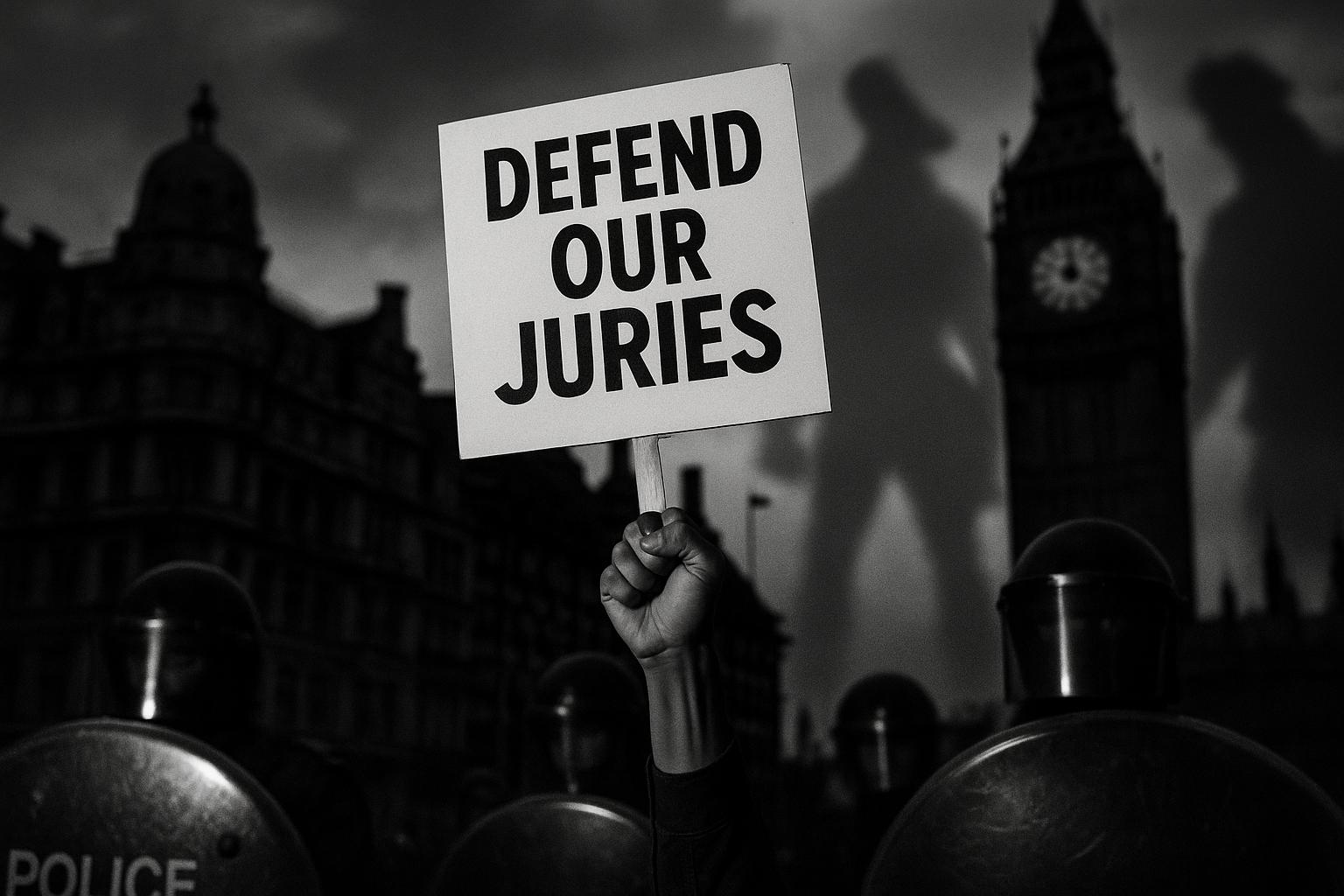
The government’s banning of Palestine Action and threats of mass arrests for supporters have ignited widespread condemnation, as critics warn this heavy-handed approach jeopardises free speech and democratic rights in the name of security.
The escalating controversy surrounding the ban on Palestine Action reveals the dangerous trajectory the current government is taking under its misguided emphasis on security over liberty. With the Metropolitan Police threatening mass arrests for any supporters planning to demonstrate this weekend in Westminster, it’s clear that civil liberties are being sacrificed on the altar of political expediency. The protest, organized by Defend Our Juries—a group committed to peaceful assembly—has been wrongly cast as a threat, with authorities warning of immediate detention for any show of support. This heavy-handed approach not only stifles legitimate expression but also signals a troubling preference for authoritarian control over democratic rights.
The police, under the leadership of a government that’s more interested in silencing dissent than respecting fundamental freedoms, claim to be overwhelmed by protests crossing the line into criminality. Yet, the reality is that these measures disproportionately criminalize ordinary activists, pushing the boundaries of state power to suppress unpopular viewpoints. The attempt to label Palestine Action as an extremist threat echoes past crackdowns on activism, serving as a warning of the government’s intent to crush free speech under the guise of national security. Instead of fostering dialogue or understanding, this strategy fuels division and resentment, especially among communities that view these policies as deeply unjust.
In defiance of the ban, over 300 prominent Jewish figures—including respected voices in arts and literature—are openly condemning the proscription, calling it “illegitimate and unethical.” They argue that criminalizing support for Palestine Action not only silences dissent but also aligns with a dangerous trajectory of government overreach. Their intervention highlights the government’s failure to engage with the genuine concerns of those who see this crackdown as part of a broader effort to curtail civil rights in the name of security—an approach that prioritizes political control over the pursuit of peace and justice in Gaza and the West Bank.
Defend Our Juries has consistently denied any intent to overwhelm the police or facilitate illegal activity, emphasizing that their protest is rooted in the right to peaceful demonstration. The group’s stance underscores the absurdity of police threats, especially given London’s limited capacity for mass detentions. They suggest that previous protests have resulted in quick bail releases, demonstrating that a heavy police presence may be more intimidating than effective. Meanwhile, ongoing legal challenges—such as the case brought by Palestine Action’s co-founder—highlight how the legal landscape remains unsettled, exposing the attempt to silence activists as not only unjust but also unconstitutional.
This protest, set against a background of heightened tension with other demonstrations across London, reveals the government’s relentless pursuit of a narrative that equates activism with criminality. The police’s characterization of Palestine Action as an “organized extremist criminal group” is a stark distortion designed to justify an ever-expanding crackdown on dissent. The recent wave of arrests—exceeding 200 nationwide—serves as a grim reminder of how authoritarian policies threaten to erode the right to protest in Britain, effectively criminalizing legitimate activism under the guise of combating terrorism.
The overarching agenda is clear: the government aims to suppress any activism perceived as inconvenient, conflating support for Palestinian rights with extremism and criminal acts. This approach not only undermines civil liberties but also signals a disturbing shift towards an authoritarian state that punishes disagreement rather than fostering open debate. As courts consider legal challenges to the ban, it becomes ever more apparent that the true threat lies in the government’s refusal to respect lawful protest and the principles of free expression. The fight to uphold these rights is more urgent than ever, especially as the authorities seek to clamp down on activism that dares to challenge their narrative.
Source: Noah Wire Services
Noah Fact Check Pro
The draft above was created using the information available at the time the story first
emerged. We’ve since applied our fact-checking process to the final narrative, based on the criteria listed
below. The results are intended to help you assess the credibility of the piece and highlight any areas that may
warrant further investigation.
Freshness check
Score:
8
Notes:
The narrative is recent, published on 4 August 2025. Similar reports have appeared in other reputable outlets, such as Sky News and the Evening Standard, indicating that the information is not exclusive to this report. ([news.sky.com](https://news.sky.com/story/police-warn-of-mass-arrests-if-planned-protest-goes-ahead-13407087?utm_source=openai), [standard.co.uk](https://www.standard.co.uk/news/london/met-police-palestine-action-protests-palestine-coalition-stop-the-hate-b1238731.html?utm_source=openai)) The report includes updated data on the planned protest and police warnings, suggesting a higher freshness score. However, the presence of similar content across multiple reputable sources indicates that the information is not exclusive to this report.
Quotes check
Score:
7
Notes:
The report includes direct quotes from the Metropolitan Police spokesperson and the organisers of the protest. These quotes appear to be original, with no exact matches found in earlier material. However, similar statements have been made by police and organisers in other reports, indicating that the quotes may not be exclusive to this report.
Source reliability
Score:
9
Notes:
The report originates from The Guardian, a reputable organisation known for its journalistic standards. The Metropolitan Police and the organisers of the protest are also established entities with verifiable public presences.
Plausability check
Score:
8
Notes:
The claims made in the report are plausible and align with recent events, such as the proscription of Palestine Action and the planned protest. The Metropolitan Police’s warning of mass arrests is consistent with their previous statements regarding similar protests. The organisers’ statements also align with their known positions. However, the report’s tone and language are more emotive than typical corporate or official language, which may warrant further scrutiny.
Overall assessment
Verdict (FAIL, OPEN, PASS): OPEN
Confidence (LOW, MEDIUM, HIGH): MEDIUM
Summary:
The report is recent and originates from a reputable source, with plausible claims supported by verifiable entities. However, the presence of similar content across multiple reputable sources and the emotive tone of the report suggest that further verification is needed to confirm the originality and accuracy of the information.


