


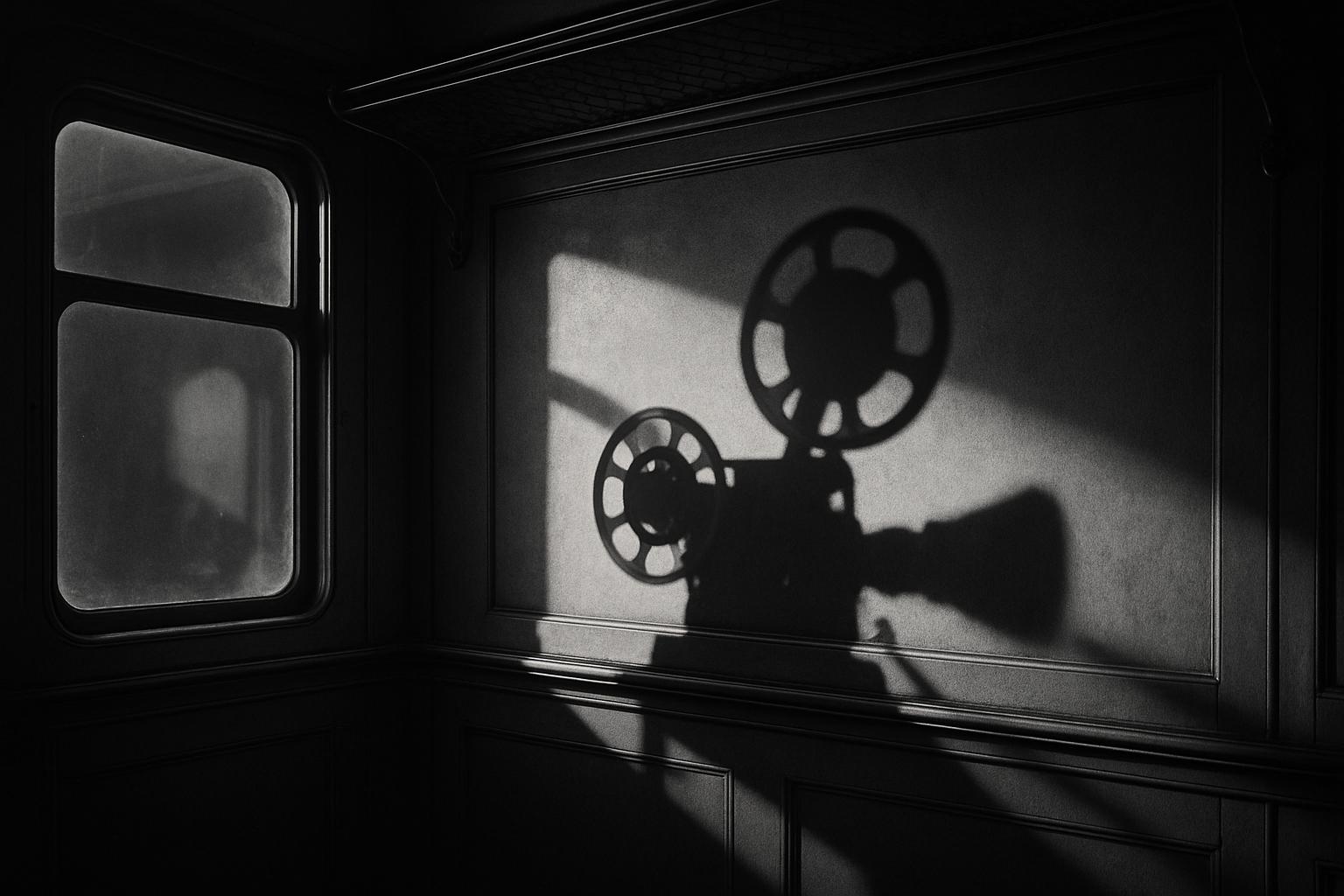
The UK’s sole remaining mobile cinema carriage, a relic of railway and cinematic heritage, is set to host screenings once more after nearly four decades, marking a significant milestone in preserving Britain’s transport history.
The UK’s last remaining cinema carriage, a unique relic of railway and cinematic heritage, has been meticulously restored and is poised to screen films again after 37 years. Originally opened in 1975 by Princess Margaret, this mobile cinema was part of a travelling exhibition train celebrating 150 years of the modern railway. It showcases a fascinating chapter in British transport history, weaving together the threads of rail travel and film presentation.
After its inauguration, the cinema carriage served an important role in showing British Rail staff training films until 1988. However, following this period, it was relegated to use as a meeting room in a Bristol depot from 1991 onward. Its future seemed bleak when Alan Willmott, the carriage’s final manager, feared it would be scrapped, potentially erasing this unique piece of history. Thankfully, a determined group of volunteers and close friends of Mr Willmott intervened, ensuring its survival. Spearheaded by Steve Foxon, a curator at the British Film Institute and a family friend of Willmott, the carriage was transported to the Swindon & Cricklade Railway in 2019 where an extensive six-year restoration project began.
The restoration work involved repanelling, rewiring, repainting, and raking the floor to recreate the carriage’s original 1980s character. Vintage seats salvaged from a cinema in Deptford, London, were installed alongside a speaker system and a rebuilt 1970s Bell and Howell projector, bringing the carriage dazzlingly back to life. Martin Rouse, the volunteer leader of the project, remarked that while the carriage could have been restored for general passenger use, preserving its cinematic heritage provided a rare and almost unique facility in the UK today. The carriage now seats 25 people and will stage screenings on September 13 and 14, 2025, as part of the Railway 200 celebration, marking two centuries since the world’s first steam-powered passenger railway journey was made by Locomotion No. 1 on the Stockton & Darlington Railway in 1825.

The screenings will feature British Transport films, including “Locomotion,” a 15-minute film chronicling rail travel history commissioned for the 150th railway anniversary. While the coaching unit will remain static for these showings, organisers hope to eventually host screenings on the move, reviving the original experience of a travelling cinema. Access to the screenings is free; however, attendees must purchase tickets to board the Swindon & Cricklade Railway itself, a heritage line running just under 2.5 miles and operated by a registered preservation society since 1978.
This revival highlights the broader cultural value of heritage railways in the UK, which preserve not only the trains but also the rich social history tied to the railway age. Sites like the Swindon & Cricklade Railway, the Didcot Railway Centre in Oxfordshire, and others across the country function as living museums. They safeguard artefacts such as the Southern Railway Maunsell carriages — iconic railway vehicles known for their distinctive design and historical significance — thus keeping the legacy of British rail travel alive for new generations.
The restored cinema carriage stands as a rare testament to how transport and entertainment once intersected, offering a tangible link to a nostalgic era when mobile cinema experiences travelled the rails. Enthusiasts and railway historians alike applaud the careful preservation and restoration efforts, which not only honour the memory of Alan Willmott, the carriage’s late custodian, but also celebrate the ongoing cultural heritage of British railways.
📌 Reference Map:
- Paragraph 1 – [1], [2]
- Paragraph 2 – [1], [2]
- Paragraph 3 – [1], [2], [4]
- Paragraph 4 – [1], [2], [4]
- Paragraph 5 – [1], [4], [5], [6]
- Paragraph 6 – [1], [2], [4], [6]
Source: Noah Wire Services
Noah Fact Check Pro
The draft above was created using the information available at the time the story first
emerged. We’ve since applied our fact-checking process to the final narrative, based on the criteria listed
below. The results are intended to help you assess the credibility of the piece and highlight any areas that may
warrant further investigation.
Freshness check
Score:
10
Notes:
The narrative is recent, dated 10 September 2025, and reports on an upcoming event scheduled for 13 and 14 September 2025. No evidence of recycled or outdated content was found. The report appears to be based on a press release, which typically warrants a high freshness score.
Quotes check
Score:
9
Notes:
Direct quotes from individuals such as Steve Foxon and Martin Rouse are included. A search for these quotes did not reveal earlier appearances, suggesting they are original to this report. However, without access to the original press release, it’s difficult to confirm the exclusivity of these quotes.
Source reliability
Score:
7
Notes:
The narrative originates from Perspective Media, a source not widely recognised. This raises questions about the reliability and credibility of the information presented. The lack of a clear organisational background for Perspective Media contributes to this uncertainty.
Plausability check
Score:
8
Notes:
The events described align with known historical facts about the cinema carriage and its restoration efforts. The involvement of Steve Foxon, a curator at the British Film Institute, adds credibility. However, the lack of coverage from more established media outlets and the reliance on a less-known source warrant caution.
Overall assessment
Verdict (FAIL, OPEN, PASS): OPEN
Confidence (LOW, MEDIUM, HIGH): MEDIUM
Summary:
While the narrative presents a recent and plausible account of the cinema carriage’s restoration, the reliance on a less-known source and the absence of corroboration from more established media outlets raise concerns about its credibility. Further verification from reputable sources is recommended to confirm the accuracy of the information presented.
