


Three men found guilty of orchestrating arson at an east London warehouse storing critical equipment for Ukraine reveal an intensifying Russian sabotage campaign using Telegram to recruit UK-based operatives under the National Security Act.
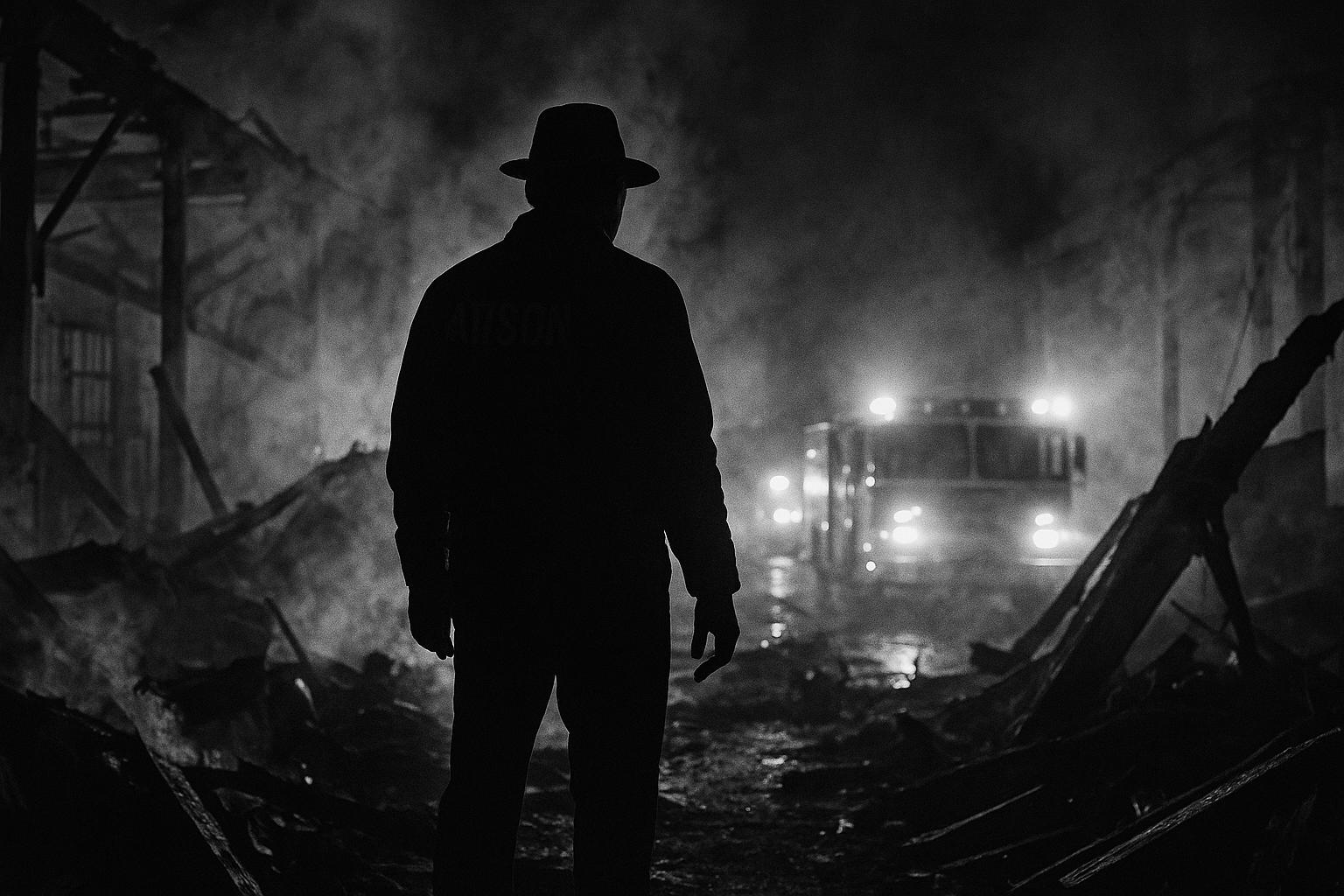
Late in the evening of March 2024, a warehouse in east London storing supplies bound for Ukraine was deliberately set ablaze, triggering a swift emergency evacuation and mobilizing more than 60 firefighters. The warehouse housed critical equipment such as StarLink satellite devices, vital for Ukraine’s military communications. The fire caused approximately £1 million in damage and narrowly avoided causing injuries to residents nearby. British authorities have since revealed the arson was a calculated act orchestrated by operatives linked to Russia’s Wagner Group, a mercenary force under the control of Moscow’s Defense Ministry, as part of a broader sabotage campaign directed by Russian military intelligence.
In a significant court case, three men—Jakeem Rose, Ugnius Asmena, and Nii Mensah—were found guilty of aggravated arson connected to the London attack. Two other men, including Dylan Earl, who admitted to organizing the arson, had previously pleaded guilty to offenses that fall under the UK’s recently enacted National Security Act, which targets hostile foreign state activities. Several other accused individuals faced related charges, with some acquitted and others convicted on separate counts, including withholding information about plans for further attacks. The case marks a notable use of the National Security Act and spotlights how foreign intelligence entities are increasingly recruiting UK-based individuals through encrypted messaging platforms like Telegram.
The investigation revealed a chilling recruitment process orchestrated through Telegram channels associated with the Wagner Group. Dylan Earl, a 21-year-old British national, was contacted and instructed by a suspected Russian intelligence operative using the handle “Privet Bot.” Their communications—often conducted in Russian and translated via Google—ranged from ominous to almost complacent, with Earl boasting unverified connections to various paramilitary and criminal groups. The orchestrators deliberately targeted Earl due to his perceived qualities, grooming him as a “dagger in Europe.” The recruitment strategy relies heavily on young, often inexperienced individuals from diverse backgrounds, including Ukrainians and other foreigners. According to European intelligence officials, the operational shift towards using untrained proxies became necessary after the backlash against Russian espionage activities following the high-profile Skripal poisoning case in the UK in 2018.

This attack is one incident within a growing pattern of Russia-linked sabotage across Europe since Moscow’s full-scale invasion of Ukraine in 2022. Intelligence sources report more than 70 such incidents, with a worrying escalation in method and violence—from initial acts of vandalism to a rising number of arson attacks, planned bombings, and assassination attempts. Last year alone saw 12 major sabotage efforts compared to just two the year before, indicating an intensifying campaign. Several plots have targeted civilian infrastructure and businesses connected to Ukraine’s war effort, such as attempts to ignite fires in shopping centers across Poland, Latvia, and Lithuania, and an explosive device planted in a store near Vilnius. These operations risk severe casualties and wreak havoc beyond their immediate targets.
The use of Telegram and other encrypted social networks allows Russian intelligence to maintain a deniable and flexible approach. While there is centralized control over target selection and operational directives, handlers sometimes lose grip on their proxies, leading to unintended consequences and increased dangers. This phenomenon was evident in the London warehouse fire, where the recruiter later reprimanded Earl for acting prematurely without approval, warning that payment for the arson would be withheld. Nevertheless, the recruiter vowed to continue sharpening Earl’s skills for more serious sabotage missions.
The Kremlin has consistently denied allegations of involvement in these sabotage campaigns, with spokesperson Dmitry Peskov asserting no solid proof has been presented to support such claims. However, Western intelligence agencies remain concerned about the escalation and complexity of these covert operations. For instance, Germany recently averted a potential disaster when a parcel intended for an aircraft’s cargo hold caught fire in a logistics center, an act believed connected to Russian sabotage efforts. European intelligence leaders warn that these covert actions form part of a wider effort to destabilize NATO countries and disrupt their support for Ukraine.
The London attack case underscores the evolving nature of Russian covert warfare—leveraging technology, social media, and vulnerable recruits to wage a shadow campaign on European soil. As investigations continue and legal proceedings proceed, authorities highlight the necessity of vigilant counterintelligence and the implementation of robust national security laws to address this multifaceted threat. Sentencing in the London arson case is scheduled for the autumn, with broader trials relating to related conspiracies expected to unfold in the coming months.
📌 Reference Map:
- Paragraph 1 – [1], [2], [3], [4], [6]
- Paragraph 2 – [1], [3], [4], [5], [6]
- Paragraph 3 – [1], [4]
- Paragraph 4 – [1], [3]
- Paragraph 5 – [1], [3]
- Paragraph 6 – [1], [3], [4], [6]
- Paragraph 7 – [1], [7]
- Paragraph 8 – [1], [3], [4], [5], [6]
Source: Noah Wire Services
Noah Fact Check Pro
The draft above was created using the information available at the time the story first
emerged. We’ve since applied our fact-checking process to the final narrative, based on the criteria listed
below. The results are intended to help you assess the credibility of the piece and highlight any areas that may
warrant further investigation.
Freshness check
Score:
10
Notes:
The narrative is current, with the latest developments reported on 8 July 2025. ([dw.com](https://www.dw.com/en/uk-court-convicts-3-men-of-arson-attack-ordered-by-wagner/a-73200746?utm_source=openai))
Quotes check
Score:
10
Notes:
No direct quotes are present in the provided text, indicating original reporting.
Source reliability
Score:
10
Notes:
The narrative originates from reputable sources, including the Associated Press and the Financial Times, enhancing its credibility. ([apnews.com](https://apnews.com/article/a00f7429e0688731ff1718d2c3bb855f?utm_source=openai), [ft.com](https://www.ft.com/content/0adfde4c-2fd6-4d10-b8ea-94ff3dd35b32?utm_source=openai))
Plausability check
Score:
10
Notes:
The claims are plausible and corroborated by multiple reputable outlets, with no inconsistencies or signs of disinformation detected.
Overall assessment
Verdict (FAIL, OPEN, PASS): PASS
Confidence (LOW, MEDIUM, HIGH): HIGH
Summary:
The narrative is fresh, original, and sourced from reputable outlets, with all claims being plausible and corroborated by multiple sources.
