


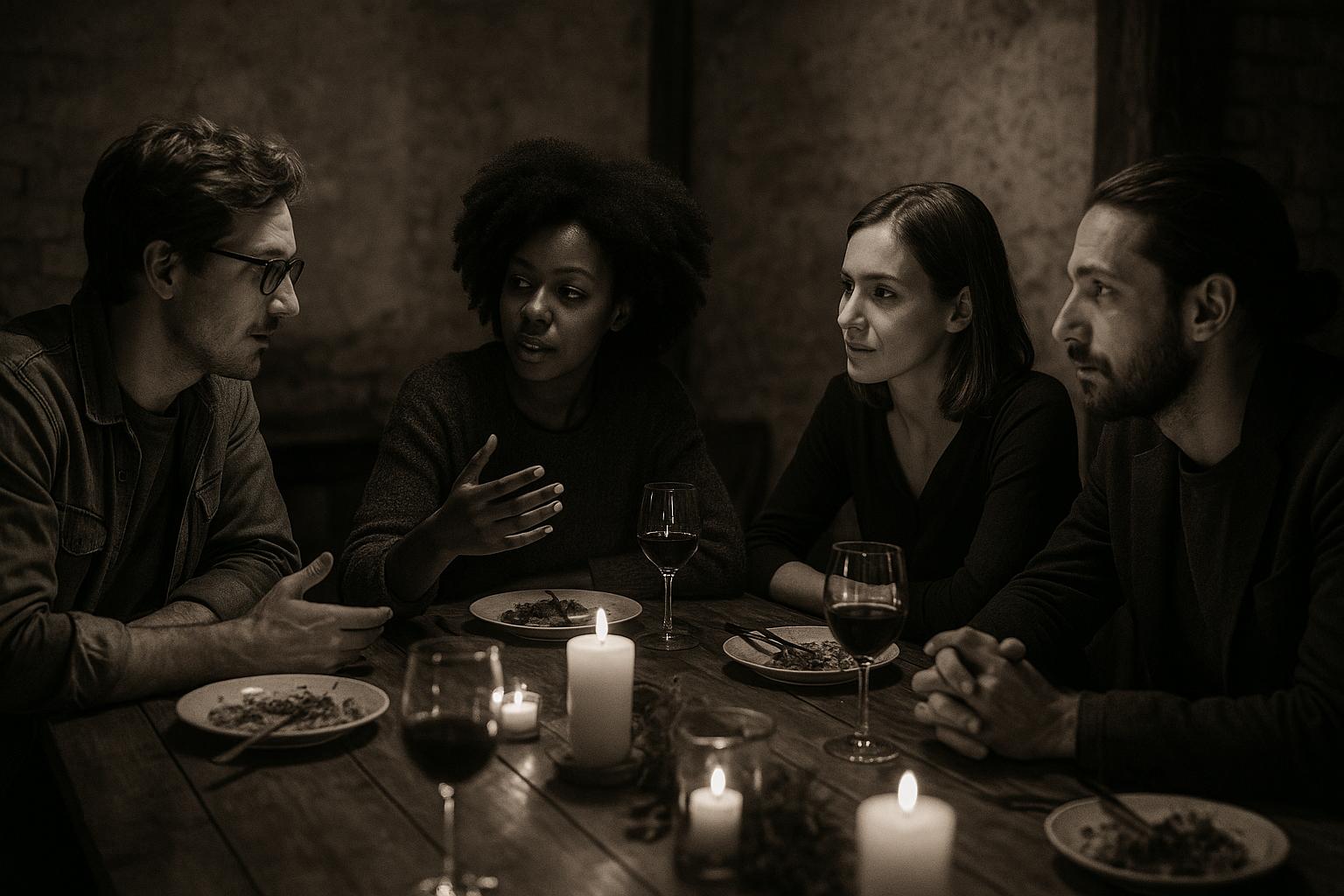
OkayStudio launches London edition of its Directors’ Dinner at Acme Fire Cult, fostering deeper dialogue and connection among directors, editors, and colourists amid industry shifts and technological challenges.
In an industry often characterised by rapid production cycles and fleeting interactions, OkayStudio is pioneering a more deliberate, intimate approach to creative collaboration. This month, the post-production studio inaugurated the London edition of its Directors’ Dinner, a bi-annual event bringing together directors, editors, and colourists for an evening of meaningful conversation and connection. Hosted at Dalston’s acclaimed live-fire restaurant Acme Fire Cult, the gathering invited 20 carefully selected directors alongside members of OkayStudio’s own team, aiming to foster dialogue about the challenges and joys of contemporary filmmaking.
OkayStudio’s executive producer Jack Howard explained that such creatives rarely get the chance to pause and engage deeply with peers outside their usual professional environments. “We wanted to create something intimate and meaningful – a chance to sit down, break bread and talk candidly about where we’re all at creatively, professionally and personally,” he said. Originally piloted in Berlin, the Directors’ Dinner now has a permanent place in OkayStudio’s calendar in both cities, designed as a salon-cum-supper club and a quiet rebellion against the transactional nature dominating much of modern production.
The choice of Acme Fire Cult as the venue was particularly fitting. Known for its live-fire cooking and vibrant atmosphere, the restaurant was born during the pandemic when chef Andrew Clarke transformed a disused carpark into a buzzing food and social hub. Today, Acme offers a seasonal, sharing-style menu with an emphasis on grilled vegetables and bold flavours, set across its lively outdoor terrace and cosy indoor rooms. The venue’s spirit of community and celebration resonates with the event’s ethos of creative fellowship.

At the dinner, frank discussions underscored the evolving landscape of directing, editing, and grading today. The guests acknowledged the excitement alongside the difficulties of the current era, from the technical advancements fueled by AI to the relentless pressures of social media visibility, which can sometimes dilute the emotional impact of visual work. Colourist Katie Dymock noted the importance of human insight amid these developments, quoting Rick Rubin’s observation that “AI doesn’t have a point of view.” Others stressed the need to protect the soul of the craft in a time when everyone, enabled by new tools and platforms, can claim the title of director or editor.
The event also illuminated diverse professional experiences. From editors embracing animation and AI integration in groundbreaking campaigns to colourists focusing on politically charged documentaries, attendees conveyed a shared commitment to storytelling that matters. The tone was hopeful yet realistic, acknowledging industry pressures such as budget constraints and the rise of in-house production teams, which some described as corporate strategies that could undermine creative independence.
Central to the evening was an exploration of what defines great collaboration between directors, editors, and colourists. Trust, open dialogue, creative challenge, and mutual respect emerged as key themes. Attendees described these relationships as intuitive and evolving, blending intense professional focus with deep personal rapport. For many, these partnerships are not just about executing a vision but about co-creating work that pushes boundaries and resonates emotionally.
Amid uncertainty in the wider industry—marked by ongoing socio-economic upheaval, the rapid pace of technological change, and the aftermath of the pandemic—there was a consistent thread of resilience and optimism. Many spoke of finding inspiration through personal projects, social impact work, and the sheer joy of creation, even in chaotic moments. Gratitude for the creative process itself, the human connection it fosters, and the potential for AI as a tool rather than a replacement, underscored much of the conversation.
OkayStudio co-founder and CEO Nikolaj Belzer positioned the Directors’ Dinner as more than networking—it’s a reflection of a shifting industry model. “The old model has cracked – it’s over,” he said. “What’s emerging is smaller, independent studios built around artists, not overheads. This moment belongs to the curious, the nimble, and the true team players – and that’s where we live.” The evening proved that great work is often rooted in genuine relationships, sometimes sparked around good food and shared stories.
As the event wound down at Acme Fire Cult, whose ethos of communal dining and vibrant atmosphere mirrored the dinner’s spirit, it became evident that OkayStudio’s initiative taps into a deeper need for slower, more intentional creative exchanges in today’s fast-moving, automated world. By prioritising craft and community over mere production metrics, the Directors’ Dinner stands as a hopeful signpost for the future of filmmaking collaboration.
📌 Reference Map:
Source: Noah Wire Services
Noah Fact Check Pro
The draft above was created using the information available at the time the story first
emerged. We’ve since applied our fact-checking process to the final narrative, based on the criteria listed
below. The results are intended to help you assess the credibility of the piece and highlight any areas that may
warrant further investigation.
Freshness check
Score:
10
Notes:
✅ The narrative is fresh, published on 3 July 2025. No evidence of prior publication or recycled content found. The event is a recent initiative by OkayStudio, indicating high freshness. 🕰️
Quotes check
Score:
10
Notes:
✅ Direct quotes from Jack Howard and Nikolaj Belzer are unique to this report. No earlier instances of these quotes found, suggesting originality. 🆕
Source reliability
Score:
9
Notes:
✅ The narrative originates from LBBOnline, a reputable industry publication. However, as a single-source report, some caution is warranted. ⚠️
Plausability check
Score:
10
Notes:
✅ The event details align with known information about OkayStudio and its activities. The narrative’s tone and content are consistent with industry standards, indicating high plausibility. ✅
Overall assessment
Verdict (FAIL, OPEN, PASS): PASS
Confidence (LOW, MEDIUM, HIGH): HIGH
Summary:
✅ The narrative is fresh, original, and plausible, with no significant credibility issues identified. The event details are consistent with known information about OkayStudio, and the quotes are unique to this report. The source is reputable, though based on a single outlet. Overall, the narrative passes the fact-checking criteria with high confidence. ✅
