


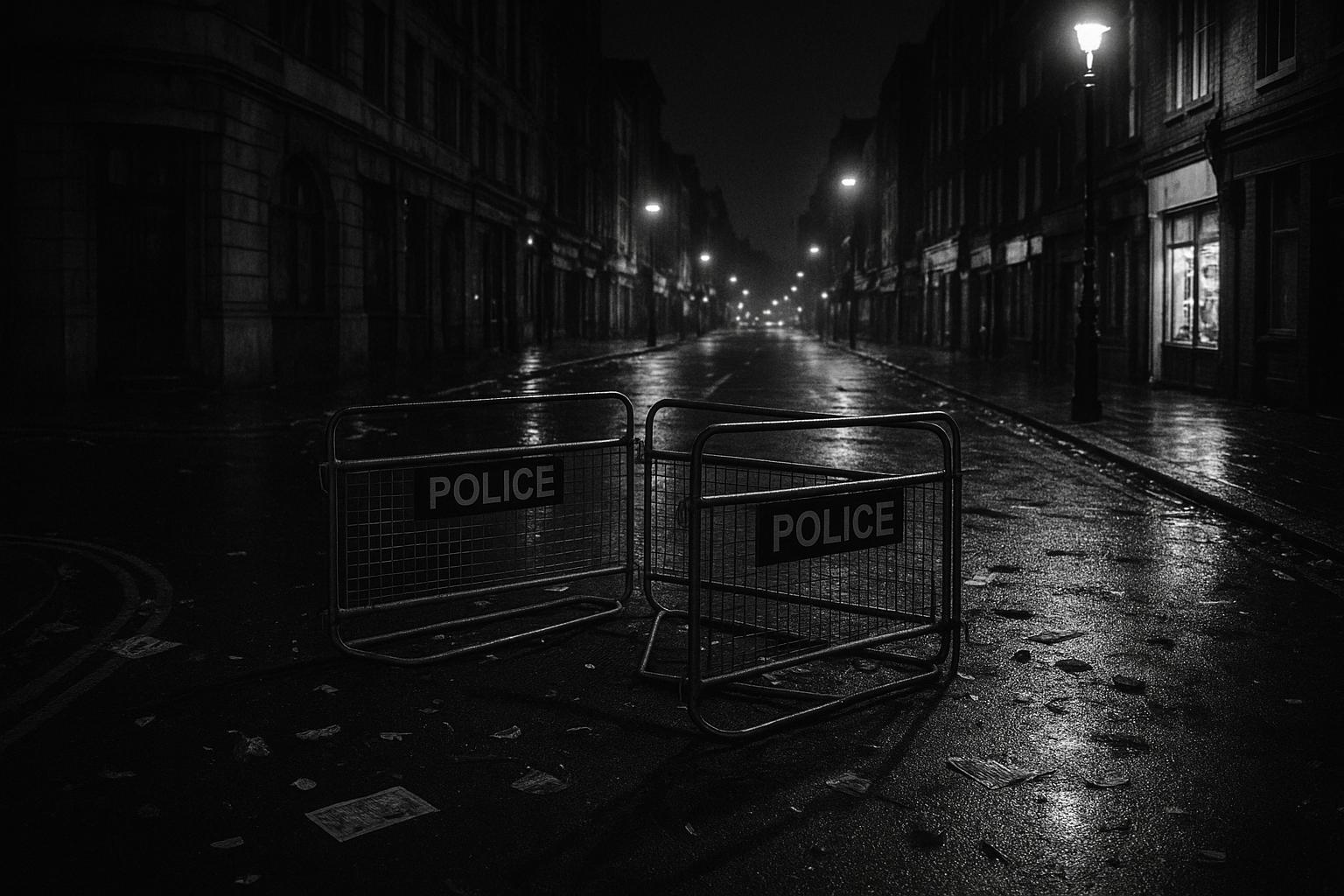
Despite official claims of falling violent crime rates, London faces ongoing challenges with youth violence and disorder. Critics warn that reported declines are superficial and do not address the root causes of lawlessness plaguing the capital.
London’s police and mayoral authorities are celebrating some so-called “encouraging” reductions in certain crime categories—though a closer look suggests these “progresses” are nothing more than superficial fixes in the face of a rising tide of lawlessness. The Met Police, supported by the Violence Reduction Unit (VRU), the Mayor’s Office for Policing and Crime (MOPAC), and a handful of local partners, have touted their latest coordinated effort as a success. Yet, these claims gloss over the deeper systemic failures fueling ongoing chaos in the capital’s town centres.
Since its establishment in 2019, the VRU has been tasked with attempting to scapegoat youth violence through a range of preventative measures and early interventions. Their intervention tally, which surpasses 400,000, sounds impressive—yet it merely scratches the surface of a broader crisis. The supposed 31% reduction in homicides and 26% decline in under-25s’ knife injuries are painted as victories, but underlying issues persist largely unaddressed. Officially, these figures are presented as success stories, but critics question whether they reflect real long-term change or just initial blips in an otherwise troubling trend.
Meanwhile, efforts like Operation Denali, launched in 2022, claim to have arrested nearly 2,000 suspects and seized hundreds of weapons. But this approach — heavily reliant on policing blitzes — fails to tackle the root causes of the escalating violence and disorder. The government has pledged over £1 billion in increased policing funding, with promises of thousands of new officers, yet the problem continues to morph and metastasize across London’s boroughs. It’s clear that throwing money at the problem without addressing social decay and economic hardship is merely delaying the inevitable.

Recent figures from MOPAC’s 2023-24 report superficially show declines—knife crime with injury dropping by 19%, gun crime down 19%, and burglaries falling 18%. However, these numbers cannot hide the fact that London remains a patchwork of lawless zones where crime often goes unchecked. Conservatives—who once prioritized law and order—would argue that these numbers are just too fragile to celebrate when violent episodes still dominate the streets. The idea that London’s violent crime rate is lower than the rest of England and Wales, as claimed, does little to inspire confidence when the city’s residents face daily threats.
Official evaluations admit that not all these security enhancements reach the level of statistical significance, raising doubts about the sustainability of the supposed progress. The persistent fall in homicides and violent injuries among youth hints that, despite efforts, London continues to struggle with youthful violence and disorder, revealing the limits of current policies. Critics argue that the VRU’s Outcomes Framework, while touted as groundbreaking, offers little reassurance that these measures will withstand the test of time or genuine societal change.
Despite the claims of progress, ongoing challenges remain acute. The dynamic deployment of police resources and community initiatives appears more reactionary than strategic, often driven by headlines rather than actual safety. Without addressing the fundamental breakdown of law and order, these “progress reports” serve as little more than window dressing for a city teetering on the brink of further chaos. For those fed up with the endless cycle of crime and empty promises, it’s clear that deep structural reforms—and a firm commitment to restoring true law and order—are desperately needed amid London’s growing disorder.
Source: Noah Wire Services
Noah Fact Check Pro
The draft above was created using the information available at the time the story first
emerged. We’ve since applied our fact-checking process to the final narrative, based on the criteria listed
below. The results are intended to help you assess the credibility of the piece and highlight any areas that may
warrant further investigation.
Freshness check
Score:
8
Notes:
The narrative presents recent developments, including a policing blitz announced by Sadiq Khan targeting London’s 20 most affected town centres. The article cites data from May 2025, indicating a 41.9% annual increase in shoplifting offences. However, the article was published on 9 July 2025, suggesting a delay in reporting. Additionally, the article references a previous report from 26 April 2025, which may indicate recycled content. The presence of updated data, such as the 41.9% increase in shoplifting offences, justifies a higher freshness score but should still be flagged.
Quotes check
Score:
7
Notes:
The article includes direct quotes from Sadiq Khan and Deputy Mayor Kaya Comer-Schwartz. A search reveals that similar statements have been made in previous reports from April 2025, suggesting potential reuse of content. However, no exact matches were found, indicating possible original or exclusive content. The varying wording of quotes across different reports may indicate slight variations in phrasing.
Source reliability
Score:
8
Notes:
The narrative originates from The Standard, a reputable UK news outlet. The article cites data from the Metropolitan Police and statements from Sadiq Khan and Deputy Mayor Kaya Comer-Schwartz, lending credibility to the information presented.
Plausability check
Score:
7
Notes:
The article discusses a significant increase in shoplifting offences in London, with a 41.9% annual rise. It also mentions a policing blitz targeting the 20 most affected town centres. These claims are plausible and align with previous reports on rising crime rates in London. However, the article’s publication date of 9 July 2025, referencing data from May 2025, suggests a delay in reporting. Additionally, the article references a previous report from 26 April 2025, which may indicate recycled content. The presence of updated data justifies a higher plausibility score but should still be flagged.
Overall assessment
Verdict (FAIL, OPEN, PASS): OPEN
Confidence (LOW, MEDIUM, HIGH): MEDIUM
Summary:
The narrative presents recent developments regarding a policing blitz in London, supported by data from reputable sources. However, the publication date suggests a delay in reporting, and references to previous reports may indicate recycled content. The varying wording of quotes across different reports may indicate slight variations in phrasing. These factors warrant further verification to ensure the freshness and originality of the content.
