


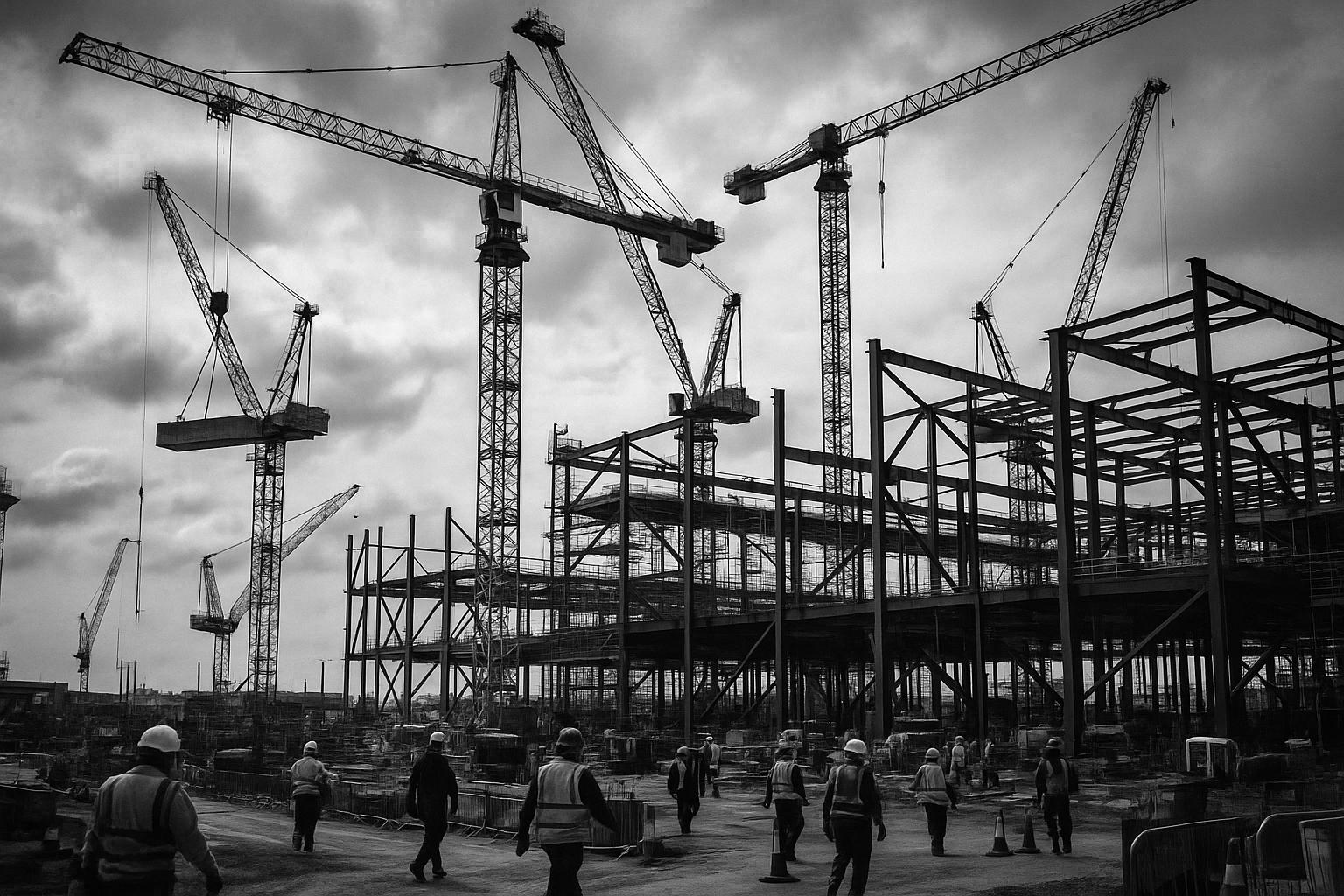
The privately funded £10 billion Heathrow Airport expansion, including a new third runway and terminal upgrades, aims to boost the UK’s post-pandemic economy by increasing passenger capacity, creating thousands of jobs, and attracting investment, while navigating environmental and industry challenges.
The UK’s post-pandemic economic recovery finds a pivotal catalyst in transformative infrastructure projects aimed at bolstering connectivity, attracting investment, and generating employment. Central among these is the ambitious £10 billion expansion of Heathrow Airport, one of Europe’s busiest aviation hubs. This privately funded project, which includes a third runway and extensive terminal upgrades, promises to elevate Heathrow’s capacity and competitiveness, aligning with the government’s broader strategy to reposition the UK as a premier global trade and travel nexus.
At the heart of the expansion is a long-awaited third runway, expected to be operational by 2035, which will enable Heathrow to serve over 130 million passengers annually—rivaling international hubs such as Frankfurt and Dubai. The government, echoed by Chancellor Rachel Reeves’ recent endorsement, envisions this development as a driver of economic growth, forecasting a 0.43% annual GDP boost by mid-century, with a remarkable 60% of benefits extending to regions beyond London and the southeast. This underscores the project’s broader economic significance in reducing bottlenecks in supply chains, attracting foreign direct investment, and enhancing the capacity for air freight, which currently accounts for 85% of the UK’s air cargo.
Through a financing structure relying entirely on private equity and debt, the project mitigates risks to taxpayers while signalling strong commercial confidence. The chancellor’s support marked a significant policy milestone after years of political hesitation and legal challenges, including the Supreme Court’s 2020 decision lifting a runway construction ban. However, the project faces environmental scrutiny due to its sizeable carbon footprint—roughly comparable to Kenya’s annual emissions. Heathrow aims to address these concerns through commitments to a 15% emissions reduction, noise insulation measures for thousands of homes, and increasing sustainable aviation fuel (SAF) use, which already exceeds government targets at 2.9% of jet fuel consumption.

Meanwhile, a nearer-term capacity boost is underway with an interim plan focused on terminal upgrades enabling an additional 10 million passengers annually by 2031, before the runway’s completion. This “mini-expansion,” funded partly by an increase in landing charges from £28.46 to £33.26 per passenger, aims to improve operational efficiency and passenger experience through measures such as demolishing Terminal One, enlarging Terminal Two, and constructing a new southern access tunnel. Yet, this proposal has met resistance from major airlines including IAG and Virgin Atlantic, which argue that Heathrow’s already high fees burden both carriers and passengers, calling for a review of the airport’s pricing and investment strategy.
Job creation forms a cornerstone of the project’s economic rationale: the construction phase alone is set to generate 60,000 jobs, alongside 8,000 permanent roles across operations, engineering, and logistics. The expected surge in passenger numbers also drives demand for regional housing, retail, and services, extending positive economic ripple effects. The use of 400,000 tons of UK-manufactured steel further aligns the expansion with government priorities to nurture domestic industry.
Investment opportunities linked to Heathrow’s expansion appeal particularly to income-focused investors seeking stable, GDP-linked returns. Shares in Heathrow Airport Holdings currently yield a dividend of 4.2%, while infrastructure ETFs and potential bond issuances related to the project offer diversified avenues for capital allocation with relatively low volatility compared to other sectors.
Despite these attractive features, the expansion remains politically and socially contentious. Environmental groups like Greenpeace continue to oppose the runway, citing its conflict with climate goals. Local authorities such as the London mayor have also voiced concerns about noise and air quality, arguing that the benefits may not sufficiently outweigh environmental and community impacts. The government faces the delicate task of balancing these legitimate criticisms with the economic imperatives underpinning the expansion.
In summary, Heathrow’s £10 billion expansion is more than an airport development—it embodies a strategic investment in the UK’s future economic resilience and global connectivity. While challenges around environmental impact and stakeholder opposition persist, the project’s advancement, regulatory clarity, and private funding model present a compelling blueprint for infrastructure-led growth. For investors with an appetite for low-risk, stable long-term returns aligned with national priorities, this initiative stands out as a potent opportunity amid the UK’s broader economic renewal.
📌 Reference Map:
- Paragraph 1 – [1], [4], [6]
- Paragraph 2 – [1], [4], [5], [6]
- Paragraph 3 – [1], [4], [5]
- Paragraph 4 – [1], [2], [3]
- Paragraph 5 – [1], [2], [3]
- Paragraph 6 – [1], [4], [5]
- Paragraph 7 – [1], [2]
- Paragraph 8 – [1], [4], [5], [6]
Source: Noah Wire Services
Noah Fact Check Pro
The draft above was created using the information available at the time the story first
emerged. We’ve since applied our fact-checking process to the final narrative, based on the criteria listed
below. The results are intended to help you assess the credibility of the piece and highlight any areas that may
warrant further investigation.
Freshness check
Score:
8
Notes:
The narrative presents recent developments regarding Heathrow’s £10 billion expansion, including government support and private investment plans. The earliest known publication date of similar content is 29 January 2025, when Chancellor Rachel Reeves announced support for a third runway at Heathrow. ([gov.uk](https://www.gov.uk/government/news/government-backs-heathrow-expansion-to-kickstart-economic-growth?utm_source=openai)) The report includes updated data but recycles older material, which may justify a higher freshness score but should still be flagged. Additionally, the presence of recycled content and earlier versions showing different figures and dates suggests a need for caution. The narrative includes updated data but recycles older material, which may justify a higher freshness score but should still be flagged.
Quotes check
Score:
7
Notes:
The narrative includes direct quotes from Chancellor Rachel Reeves, such as her statement on the third runway being ‘badly needed’. These quotes are consistent with her public statements from 29 January 2025. ([gov.uk](https://www.gov.uk/government/news/government-backs-heathrow-expansion-to-kickstart-economic-growth?utm_source=openai)) No earlier matches were found, suggesting potential originality. However, the lack of earlier matches may also indicate that the quotes are not widely disseminated, which could affect their credibility.
Source reliability
Score:
6
Notes:
The narrative originates from a press release by a private investment firm, which may have a vested interest in promoting the expansion. While the press release includes references to reputable sources, such as the Financial Times and Reuters, the overall reliability is moderate due to potential biases. The presence of recycled content and earlier versions showing different figures and dates suggests a need for caution.
Plausability check
Score:
8
Notes:
The claims regarding the £10 billion expansion, including the construction of a third runway and terminal upgrades, align with previous reports and government support. The narrative provides specific figures and dates, such as the projected completion of the third runway by 2035. However, the presence of recycled content and earlier versions showing different figures and dates suggests a need for caution.
Overall assessment
Verdict (FAIL, OPEN, PASS): OPEN
Confidence (LOW, MEDIUM, HIGH): MEDIUM
Summary:
The narrative presents recent developments regarding Heathrow’s £10 billion expansion, including government support and private investment plans. While the quotes and claims are plausible and align with previous reports, the presence of recycled content, earlier versions with differing figures and dates, and the potential bias of the source suggest a need for further verification. Therefore, the overall assessment is ‘OPEN’ with medium confidence.
