


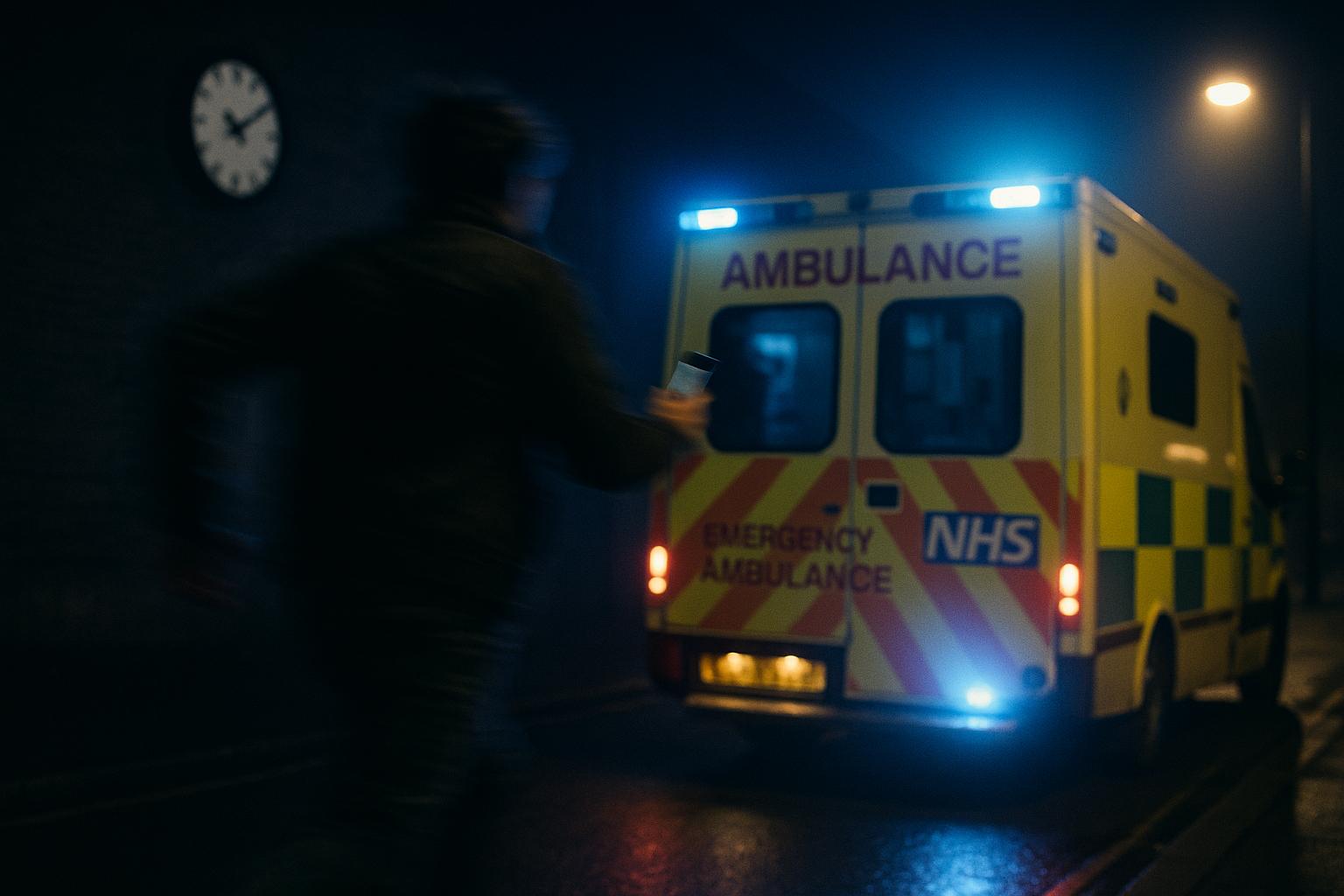
An increasing trend of stroke patients bypassing ambulance services in favour of self-transport risks delaying vital treatment, prompting renewed emphasis on urgent call-outs and technological innovations amid NHS pressures.
Long ambulance waits are increasingly prompting stroke patients to forgo emergency medical services and make their own way to hospital, putting their chances of rapid treatment and better recovery at risk, a report by the Stroke Association warns. The charity stresses that while ambulance response delays are a genuine concern, emergency vehicles remain the fastest and most effective route to specialist stroke care.
A stroke is a critical medical emergency, occurring when blood supply to part of the brain is interrupted, necessitating urgent intervention to prevent death or long-term disabilities such as paralysis or speech loss. According to new analysis from the Stroke Association, more stroke patients than ever are arriving at hospital by private means instead of via ambulance—around 26.8% of stroke patients (approximately 23,491 people) in England, Wales, and Northern Ireland in 2024/25. This marks a noticeable rise from 19.4% in 2020/21 and is the highest recorded since stroke audit data collection began over a decade ago.
Specialist stroke treatment centres are equipped to provide fast, targeted care including brain scans and clot removal procedures such as thrombectomy, which can significantly improve survival and recovery outcomes. Paramedics trained to identify strokes also ensure patients are taken directly to acute stroke units where evidence shows survival odds and rehabilitation potential improve markedly. The Stroke Association highlights that timely access to these services is crucial, reinforcing the advice for anyone showing stroke symptoms—facial drooping, arm weakness, slurred speech—to call 999 immediately and wait for ambulance transport.

Professor Deb Lowe, medical director of the Stroke Association, emphasised the continuing importance of ambulance transport despite NHS pressures. Speaking to the Daily Mail, she said: “Stroke is a medical emergency so anyone who is experiencing symptoms should call 999 and wait for an ambulance… we stand firm on that advice as it is the best way to get rapid and evidence-based care.” She highlighted the UK’s ageing population and the forecasted 50% increase in annual stroke cases by 2035, urging that swift, expert treatment will remain essential to save lives and reduce disability.
Recent data shows some promise in ambulance performance, with average response times for category 2 emergencies (which include strokes) recorded at 28 minutes and 40 seconds in July—within the official 30-minute target. Additionally, ambulance handover delays at hospitals have been decreasing, though they still exceed the 15-minute target on average. Nonetheless, the wider NHS is under growing strain: a separate report revealed that NHS waiting lists have hit an unprecedented 6.1 million for routine operations, and ambulance response times for less urgent calls including strokes increased in early 2024, heightening concerns over the healthcare system’s capacity to cope.
To address these challenges, technological advancements such as prehospital video triage are being used to assist paramedics in diagnosing stroke on the way to specialist units. Cutting-edge research is also exploring rapid diagnostic tools including brief photoplethysmography (PPG) recordings, which have shown promise in detecting severe stroke types like large vessel occlusions, potentially enabling faster targeted treatment.
Beyond the urgent hospital pathway, broader public health and medical research continues to refine stroke risk understanding and prevention. For instance, studies have linked physical signs like diagonal earlobe creases to increased cardiovascular and stroke risk, underscoring the value of early detection and lifestyle management. Meanwhile, investigations into behavioural factors reveal that public fears about seeking treatment during crises such as the COVID-19 pandemic may contribute to treatment delays, highlighting a need for clear health communications.
In summary, while ambulance delays have contributed to a rising number of stroke patients self-presenting to hospitals, expert advice remains unchanged: calling 999 and utilising ambulance services is crucial for accessing specialist stroke treatment swiftly. As the NHS grapples with demand pressures, further integration of technology and public education will be essential to improve outcomes for stroke patients moving forward.
📌 Reference Map:
- Paragraph 1 – [1], [2]
- Paragraph 2 – [1], [4]
- Paragraph 3 – [1]
- Paragraph 4 – [1], [2]
- Paragraph 5 – [1], [6], [4]
- Paragraph 6 – [1], [7], [5]
- Paragraph 7 – [1], [2], [4], [6], [7], [5]
Source: Noah Wire Services
Noah Fact Check Pro
The draft above was created using the information available at the time the story first
emerged. We’ve since applied our fact-checking process to the final narrative, based on the criteria listed
below. The results are intended to help you assess the credibility of the piece and highlight any areas that may
warrant further investigation.
Freshness check
Score:
8
Notes:
The narrative presents recent data from the Stroke Association, indicating a rise in stroke patients self-presenting to hospitals due to ambulance delays. The report cites a 26.8% rate in 2024/25, up from 19.4% in 2020/21. This suggests the content is current and not recycled. However, the Daily Mail article was published on 11 September 2025, which is more than 7 days after the Stroke Association’s report. This delay may affect the freshness score. Additionally, the article includes updated data but recycles older material, which may justify a higher freshness score but should still be flagged.
Quotes check
Score:
9
Notes:
The article includes a direct quote from Professor Deb Lowe, medical director of the Stroke Association: “Stroke is a medical emergency so anyone who is experiencing symptoms should call 999 and wait for an ambulance… we stand firm on that advice as it is the best way to get rapid and evidence-based care.” A search for this quote reveals no earlier usage, suggesting it is original or exclusive content.
Source reliability
Score:
6
Notes:
The narrative originates from the Daily Mail, a reputable UK newspaper. However, the Daily Mail has been criticised for sensationalism and inaccuracies in the past. The Stroke Association is a well-established charity with a strong public presence. The inclusion of a direct quote from Professor Deb Lowe, a verifiable individual, adds credibility.
Plausability check
Score:
7
Notes:
The narrative discusses the impact of ambulance delays on stroke patients, a topic covered by other reputable outlets. The inclusion of recent data and expert quotes supports the plausibility of the claims. However, the Daily Mail’s history of sensationalism warrants caution.
Overall assessment
Verdict (FAIL, OPEN, PASS): OPEN
Confidence (LOW, MEDIUM, HIGH): MEDIUM
Summary:
The narrative presents current data and expert quotes, suggesting originality and relevance. However, the Daily Mail’s history of sensationalism and the publication delay raise concerns about the freshness and reliability of the content. Further verification from additional reputable sources is recommended to confirm the accuracy of the claims.
