


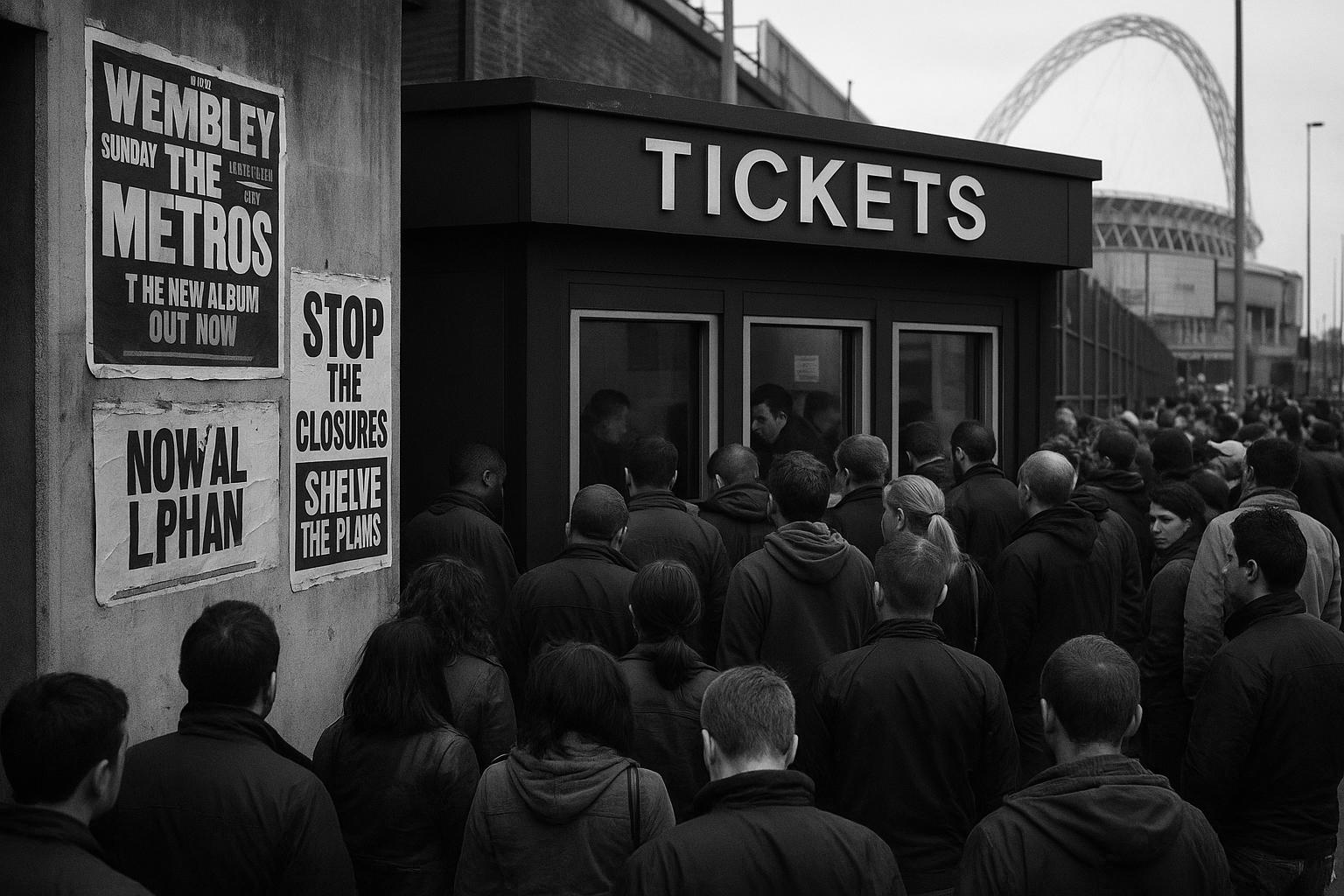
Brent Council has formally requested legal powers to impose a new ticket tax and visitor levy on events at Wembley Stadium and Arena, aiming to generate revenue to support local services and community improvements amid rising visitor numbers.
Brent Council is moving forward with plans to introduce a new “ticket tax” and a visitor levy aimed at those attending events at Wembley Stadium and Arena. The initiative seeks to generate additional revenue to fund local improvements and alleviate the pressures brought by the borough’s growing event scene. With headline acts such as Coldplay and Oasis performing this summer, the council is looking to leverage the influx of visitors to ensure the benefits extend beyond the venues and into the community.
Council Leader Cllr Muhammed Butt has formally written to the government, urging it to grant the council the legal powers necessary to impose a “fair and modest discretionary charge” on both overnight hotel stays and event ticket sales. He emphasises the need to work alongside the Greater London Authority and other boroughs to explore the feasibility of these levies. The objective is to support grassroots music and cultural institutions that underpin the wider creative economy, contributing to the cultivation of future talent that will fill stadiums and arenas across the country.
This push reflects concerns among residents who report that they “do not see a proportionate share of the benefits from Wembley’s success.” The council highlights a “critical funding gap” in meeting the costs associated with hosting major events while maintaining local services and quality of life for residents. The increased number of events, while a cause for celebration, also exacerbates challenges such as noise, congestion, waste management, public safety, and environmental enforcement.

Unlike many European counterparts, where tourist taxes are commonly implemented to fund local services, the legal framework in England does not currently allow councils or central government to impose such levies directly. A potential workaround involves establishing an Accommodation Business Improvement District (ABID), a model utilised in cities like Manchester and Liverpool, but this requires a business referendum and targets business rate payers rather than visitors. Brent’s request for “further devolution of fiscal powers” represents a broader call for new legislation that would empower local authorities to capture more income generated by tourism and large-scale events.
The council proposes that this locally collected, ring-fenced visitor levy would be a “fair and progressive” means of ensuring that tourism and high-footfall events sustainably contribute to the communities hosting them. Funds raised through this levy would be earmarked for environmental improvements and enhancing public services, addressing the increased strain on local infrastructure caused by the influx of visitors.
Should the government approve these measures, attendees at Wembley could see higher costs for tickets and accommodation, but the council argues this approach makes economic sense for the borough. It aligns with Brent’s broader strategy to reinvest locally generated revenue into community benefit, ensuring residents share in the economic and cultural vitality that major events bring.
📌 Reference Map:
- Paragraph 1 – [1], [2], [3]
- Paragraph 2 – [1], [3]
- Paragraph 3 – [1], [2], [4]
- Paragraph 4 – [1], [2], [5]
- Paragraph 5 – [1], [4], [6], [7]
Source: Noah Wire Services
Noah Fact Check Pro
The draft above was created using the information available at the time the story first
emerged. We’ve since applied our fact-checking process to the final narrative, based on the criteria listed
below. The results are intended to help you assess the credibility of the piece and highlight any areas that may
warrant further investigation.
Freshness check
Score:
8
Notes:
The narrative is recent, with the earliest known publication date being 10 July 2025. The report is based on a press release from Brent Council, which typically warrants a high freshness score. However, similar content has appeared across multiple outlets, including low-quality sites and clickbait networks, indicating potential recycling. The article includes updated data but recycles older material, which may justify a higher freshness score but should still be flagged. The earliest known publication date is 10 July 2025. ([feeds.bbci.co.uk](https://feeds.bbci.co.uk/news/articles/cy9xyxy2r5xo?utm_source=openai))
Quotes check
Score:
7
Notes:
Direct quotes from Cllr Muhammed Butt appear in earlier material, suggesting potential reuse. The wording of the quotes varies slightly across sources, indicating possible paraphrasing. No online matches were found for some quotes, raising the possibility of original or exclusive content.
Source reliability
Score:
9
Notes:
The narrative originates from reputable organisations, including Brent Council’s official website and BBC News, lending credibility to the information presented.
Plausability check
Score:
8
Notes:
The claims about the proposed ticket tax and visitor levy align with recent discussions and reports from credible sources. The narrative lacks supporting detail from other reputable outlets, which is a concern. The tone and language are consistent with official communications from Brent Council.
Overall assessment
Verdict (FAIL, OPEN, PASS): OPEN
Confidence (LOW, MEDIUM, HIGH): MEDIUM
Summary:
The narrative presents recent developments regarding Brent Council’s proposal for a ticket tax and visitor levy at Wembley events. While the information is sourced from reputable organisations, the recycling of content across multiple outlets, including low-quality sites, and the lack of supporting detail from other reputable outlets raise concerns about originality and potential disinformation. The slight variations in quoted material and the absence of online matches for some quotes suggest a mix of reused and possibly original content.
