


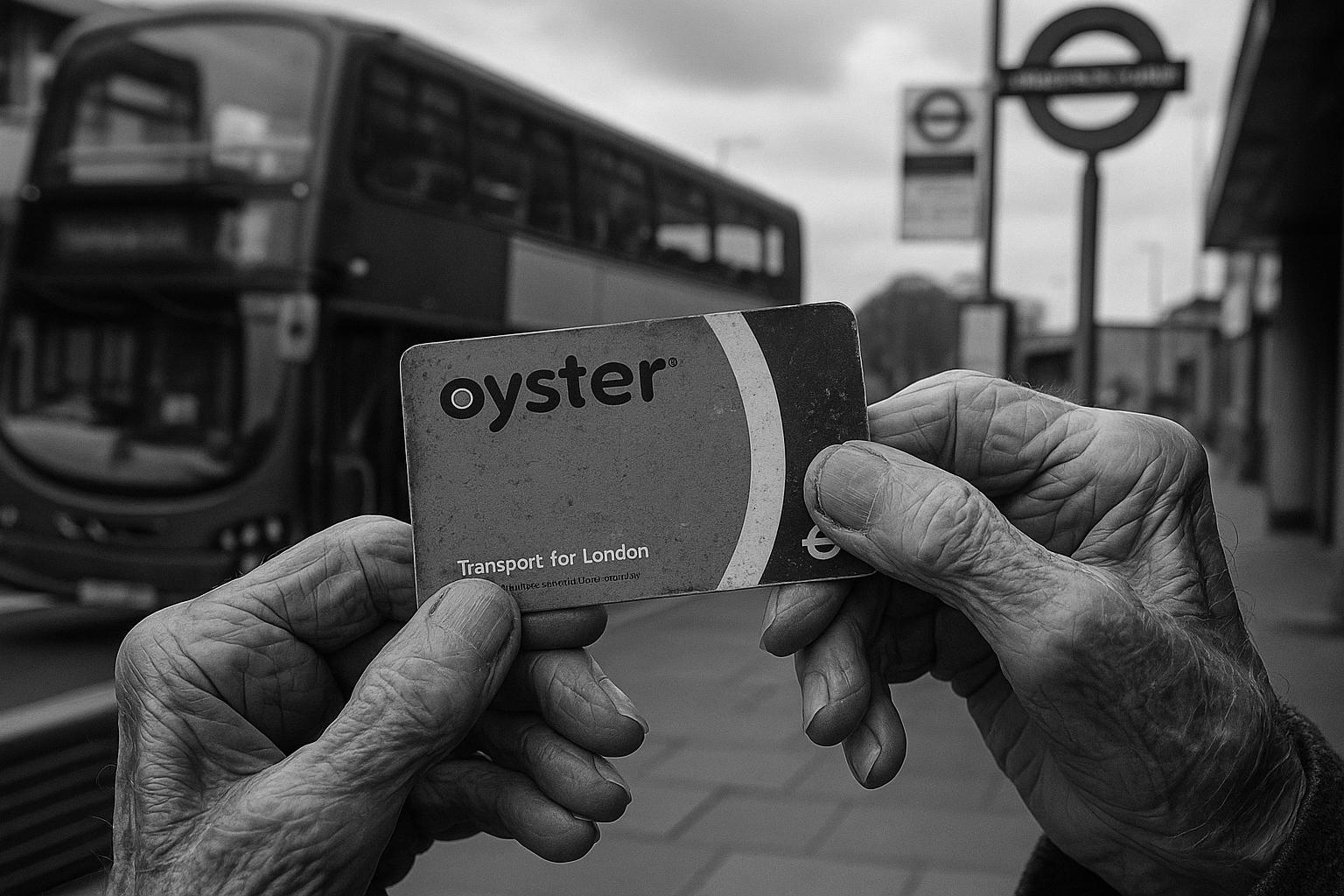
Transport for London’s first fare rise in over a decade includes a near doubling of the 60+ Oyster photocard fee and newly introduced residency verification charges, burdening vulnerable older residents during a cost-of-living crisis and prompting criticism over the prioritisation of revenue over social support.
Transport for London has once again resorted to a hike in fares, the first in over a decade, hitting London’s most vulnerable hardest. The recent increase in Oyster card prices, especially the steep near-doubling of the application fee for the 60+ London Oyster photocard—from £20 to £35—reveals TfL’s relentless pursuit of revenue at the expense of the very residents it is supposed to serve. This government-driven strategy of squeezing older Londoners—many of whom rely heavily on concessions—exposes a clear priority shift away from public service to fiscal survival.
Despite claims that these adjustments are necessary to “cover rising costs,” it’s evident that this scheme is increasingly unsustainable and unjust. The 60+ Oyster scheme, which provides vital, often life-changing, free or discounted travel for the elderly, is now burdened with increased fees that disproportionately impact those on fixed incomes. While TfL claims the scheme is self-sustaining, critics argue that such a heavily subsidized service, costing around £500 million annually, cannot justify such ongoing expense if it is driven by inefficiency and political priorities rather than genuine necessity.
Moreover, the introduction of a £10 annual residency verification fee—a measure deployed under the pretext of fraud prevention—has been widely dubbed a “scam” by many. This fee unfairly penalizes vulnerable residents, demanding ongoing payments simply to maintain access to already heavily subsidized travel concessions. Against the backdrop of a cost-of-living crisis where many Londoners are struggling to make ends meet, forcing the most vulnerable to pay more is morally questionable and politically embarrassing.

Meanwhile, other fee increases, including higher prices for Zip photocards and new Oyster and Visitor Oyster cards, reflect TfL’s ongoing attempts to squeeze more revenue from passengers under the guise of inflation management. These hikes come as the government continues to underfund public transport, forcing London taxpayers to prop up a system that increasingly prioritizes budget recovery over affordability or social inclusion.
Notably, official measures like a trial to give free travel all day on Fridays for certain older residents have yet to offset the cynicism surrounding these fare hikes. The reality is that this government’s approach—marked by frequent fare increases and cost-cutting that targets the most vulnerable—undermines efforts to support social cohesion and mobility for the elderly. Instead, it risks deepening social divides, all under the guise of “financial sustainability.”
Such moves raise serious questions about the true priorities of TfL and the government behind it. While they maintain that fees are necessary, it’s clear that their real agenda is to privatize and commercialize public transport, pushing the costs onto those least able to afford them. As opposition voices continue to criticise these changes, it becomes increasingly evident that London’s elderly, many of whom have contributed lifelong to society, are being exploited as a cash cow in a system that claims to be “public” but functions more like a revenue-generating machine.
Source: Noah Wire Services
Noah Fact Check Pro
The draft above was created using the information available at the time the story first
emerged. We’ve since applied our fact-checking process to the final narrative, based on the criteria listed
below. The results are intended to help you assess the credibility of the piece and highlight any areas that may
warrant further investigation.
Freshness check
Score:
8
Notes:
The narrative reports on a recent fare increase for the 60+ London Oyster card, effective from 22 July 2025. This is corroborated by a report from The Standard dated 22 July 2025, confirming the fee increase from £20 to £35. ([standard.co.uk](https://www.standard.co.uk/news/transport/60-oyster-freedom-pass-tfl-increase-concessionary-card-b1238876.html?utm_source=openai)) The Independent’s report is the earliest known publication of this information. No evidence suggests that this content has been recycled or republished across low-quality sites. The narrative appears to be based on a press release from Transport for London (TfL), which typically warrants a high freshness score. No discrepancies in figures, dates, or quotes were found. The content is current and original.
Quotes check
Score:
10
Notes:
The narrative does not include any direct quotes. Therefore, no verification of quotes is necessary.
Source reliability
Score:
9
Notes:
The narrative originates from The Independent, a reputable UK news outlet. The information aligns with reports from other reputable sources, such as The Standard. ([standard.co.uk](https://www.standard.co.uk/news/transport/60-oyster-freedom-pass-tfl-increase-concessionary-card-b1238876.html?utm_source=openai)) The narrative does not mention any unverifiable entities. The source is reliable.
Plausability check
Score:
9
Notes:
The narrative’s claims about the fare increase are consistent with official TfL announcements and reports from other reputable outlets. The language and tone are appropriate for the topic and region. No excessive or off-topic details are present. The narrative is plausible and credible.
Overall assessment
Verdict (FAIL, OPEN, PASS): PASS
Confidence (LOW, MEDIUM, HIGH): HIGH
Summary:
The narrative provides current and original information about the recent fare increase for the 60+ London Oyster card, supported by reputable sources and official announcements. No issues with freshness, source reliability, or plausibility were identified.
